Sheepshead Fishing: The Complete Guide to Catching Florida’s Convict Fish
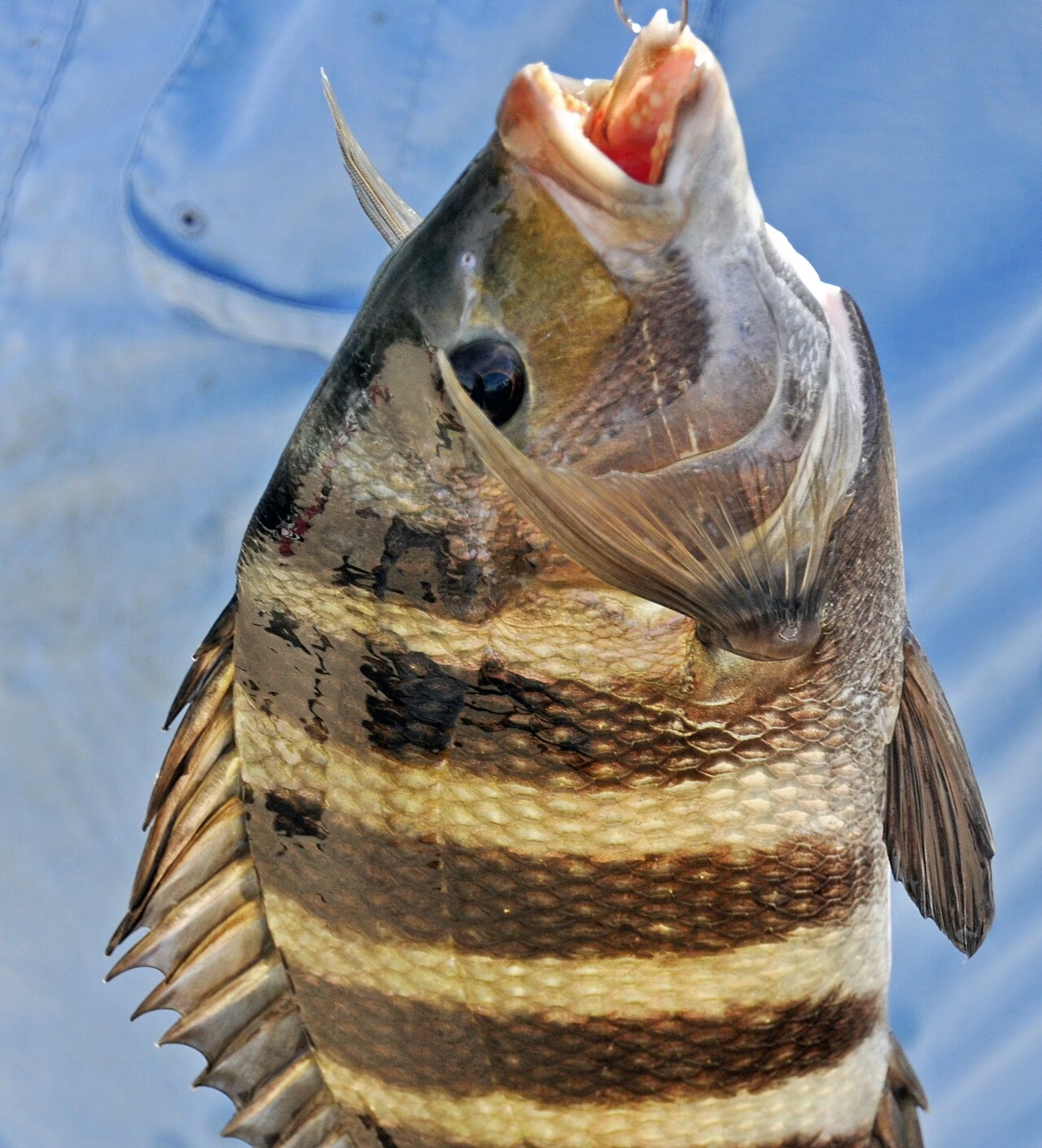
There’s a running joke among Florida anglers that sheepshead exist specifically to frustrate us. These black-and-white striped characters have teeth that look disturbingly human, fins sharp enough to draw blood, and the uncanny ability to strip your hook clean before you feel a thing.
Sheepshead (Archosargus probatocephalus) are one of those fish that separate casual anglers from serious ones. Their light, precise bite requires a different kind of attention than most inshore species. When you finally crack the code on sheepshead, you feel like you’ve earned something—because you have.
Why Sheepshead Are Different
Unlike predatory fish that chase and ambush prey, sheepshead are grazers. Those unsettling human-like teeth aren’t for show—they’re purpose-built for crushing barnacles, mussels, fiddler crabs, and oysters off hard structure. Sheepshead feed by picking and scraping, which means their strikes are subtle, slow, and often feel like nothing more than the bait getting heavy.
The classic advice is to “set the hook before you feel the bite.” That sounds like a joke, but there’s truth in it. Sheepshead are masters at taking the bait off a hook without the angler ever registering a strike. Staying hyper-focused and setting the hook on any deviation in the line—any pause, any sideways movement, any slight pressure—is the approach that puts fish in the boat.
Where to Find Sheepshead
Sheepshead live on structure—and so does black drum, a species that shares nearly identical habitat and often holds on the same pilings and jetties. Any hard substrate that grows barnacles, mussels, or tunicates is potential sheepshead habitat. My best spots throughout the Panhandle include:
Bridge and dock pilings: These are sheepshead magnets. The barnacles encrusting every piling are a food source the fish return to daily. Fish tight to the structure—within inches—because sheepshead won’t move far to take a bait.
Oyster bars: Some of my most productive sheepshead spots are the oyster reefs scattered throughout Apalachicola Bay. Fish the upside edges of bars on a falling tide when the fish are actively feeding.
Jetties and rock piles: Any rocky structure holds sheepshead. The passes along our coast—Destin, Panama City, St. George—all have jetties that produce quality sheepshead, particularly in late winter and spring when they stack up to spawn.
Nearshore artificial reefs: In 15 to 40 feet of water, artificial reef structures can hold surprisingly large sheepshead. Some of the biggest fish of the year come from nearshore reefs in late February and March.
Timing Your Trips
Sheepshead are available year-round in Florida, but winter and early spring—January through March—offer the best fishing. As water temperatures drop, sheepshead congregate near structure in large numbers, and the pre-spawn aggregations of late winter can be extraordinary. Fishing the big bridges around Pensacola, Fort Walton, and Panama City in February with a bucket of fiddler crabs is about as reliable a day of fishing as you’ll find anywhere.
Tidal movement matters enormously. My most productive fishing consistently happens during the first two hours of an incoming tide and the last two hours of outgoing. The current activates sheepshead feeding behavior and positions them in predictable spots along structure edges. Slack water periods can be slow.
Tackle and Rigging
Rigging sheepshead follows the same terminal-tackle principles as other bottom-fishing setups. A medium-heavy spinning rod, 7 feet, works well, with 20-pound braid and a short 20 to 30-pound fluorocarbon leader—maybe 18 inches. The heavier leader isn’t for the fish’s teeth (they’re not particularly leader-shy) but because you’re fishing in barnacle-covered structure that will abrade lighter line. A #1 or 1/0 circle hook is my standard choice. Some anglers prefer Kahle hooks for sheepshead; either works.
Keep your weight minimal. Use just enough split shot or an egg sinker to get the bait to the structure without creating a lot of slack in the line. The whole rig should feel fairly direct so you can detect those whisper-light bites.
Best Baits for Sheepshead
Fiddler crabs are the single best sheepshead bait. Full stop. These small marsh crabs are the natural forage that sheepshead have evolved to eat, and the fish find them irresistible. Hook the fiddler from the back of the shell through both sides to leave the shell intact and the legs wriggling. You can collect fiddlers from any marsh edge at low tide or buy them at bait shops throughout the Panhandle.
Sand fleas (mole crabs) are my second choice and are easier to find on open beaches. They’re particularly effective at jetty and pass locations. Oyster meat fished directly from a crushed shell at oyster bars is deadly and free if you’re willing to put in the work to harvest them on site. Live shrimp and pieces of blue crab also produce well.
Setting the Hook
This is everything with sheepshead. Most anglers set the hook too slowly and too gently. You need a fast, sharp hookset to drive the hook point through the relatively tough mouth of a sheepshead. I tell people to pretend you’re trying to set a hook in concrete—that level of commitment. The circle hook takes care of the direction; your job is the speed and power.
Watch your line constantly. In clear water, watch the fish. If you can see sheepshead working structure, watch their body language—a slight tipping of the head toward your bait, or a gill flare, is often the only indication that a bite has occurred. This visual style of fishing is incredibly exciting once you get the hang of it.
Regulations and Table Quality
Florida sheepshead have a minimum size of 12 inches (total length) and a bag limit of 8 per angler per day. These are reasonable limits for a fish that reaches sexual maturity quickly and spawns multiple times per year, but releasing smaller fish and targeting more of your harvest from the 14 to 16-inch range makes sense for long-term population health.
Few fish in Florida waters match sheepshead for table quality. The white, firm, sweet meat is exceptional—some say it’s the best-tasting inshore fish in the Gulf. Baked, fried, or in a chowder, they’re outstanding. The effort required to catch them makes a sheepshead dinner feel well-earned.
Sheepshead: Quick Reference
| Category | Details |
|---|---|
| Scientific Name | Archosargus probatocephalus |
| Florida Size Limit | 12 inches total length |
| Bag Limit | 15 per person/day |
| Peak Season | Winter–Spring spawn (Jan–Mar); year-round around structure |
| Primary Habitat | Dock pilings, bridge supports, oyster reefs, jetties, nearshore structure |
| Top Baits | Fiddler crabs (best), barnacle-scraped barnacles, sand fleas, oyster meat, shrimp |
| Hook | #1 to 1/0 circle or live bait hook; sharp, thin wire penetrates their hard mouth |
| Key Technique | “Feel before you set” — detect the tap, hesitate half a beat, then lift firmly |
| Best Tide | Moving tide (either direction) — sheepshead move with tidal flow over structure |
Sheepshead Bait Effectiveness Guide
| Bait | Effectiveness | Availability | Notes |
|---|---|---|---|
| Fiddler Crab (live) | ⭐⭐⭐⭐⭐ Best | Bait shops, marsh edge | Hook through top of shell; legs move naturally and draw strikes |
| Sand Flea (Mole Crab) | ⭐⭐⭐⭐ Excellent | Beach waterline, bait shops | Ideal at inlets and beach passes; hook from underneath through shell |
| Barnacle Meat | ⭐⭐⭐⭐ Excellent | Scrape from pilings | Hyper-local and free; sheepshead already feeding there — irresistible |
| Oyster Meat | ⭐⭐⭐ Good | Oyster bars, seafood markets | Soft; use small hooks and cast gently to prevent slipping off |
| Fresh Shrimp (peeled) | ⭐⭐⭐ Good | Any bait shop | Widely available; less selective than crabs but catches fish consistently |
| Artificial (jig/soft plastic) | ⭐ Poor | Tackle shops | Sheepshead rarely take artificials; they crush hard-shell prey, not chase bait |
Gear We Recommend
Here is the gear that makes this easier, ready to shop. As an Amazon Associate, we earn from qualifying purchases.
- 7ft inshore rod — See inshore rods
- 3000 spinning reel — Shop reels
- Braided line — Compare braid
- Fluorocarbon leader — See leader
- Popping cork — Shop popping corks
- Soft plastic jerkbaits — Browse lures
- Fishing pliers — See pliers