How to Set Up a Saltwater Fishing Rig for Beginners
The single biggest thing that holds beginning saltwater anglers back is not their casting, not their bait choice, and not their location — it’s their tackle setup. A rig that’s too heavy, too light, improperly balanced, or using the wrong knot for the application will cost you fish regardless of how well you do everything else. This guide walks you through building a practical, beginner-friendly saltwater setup from rod to hook.
Note: This guide focuses on the complete beginner setup — rod, reel, line, leader, and knots. For specific rig configurations like Carolina rigs, popping corks, and knocker rigs, see our dedicated saltwater fishing rigs guide.
The Beginner Saltwater Setup: Two Options
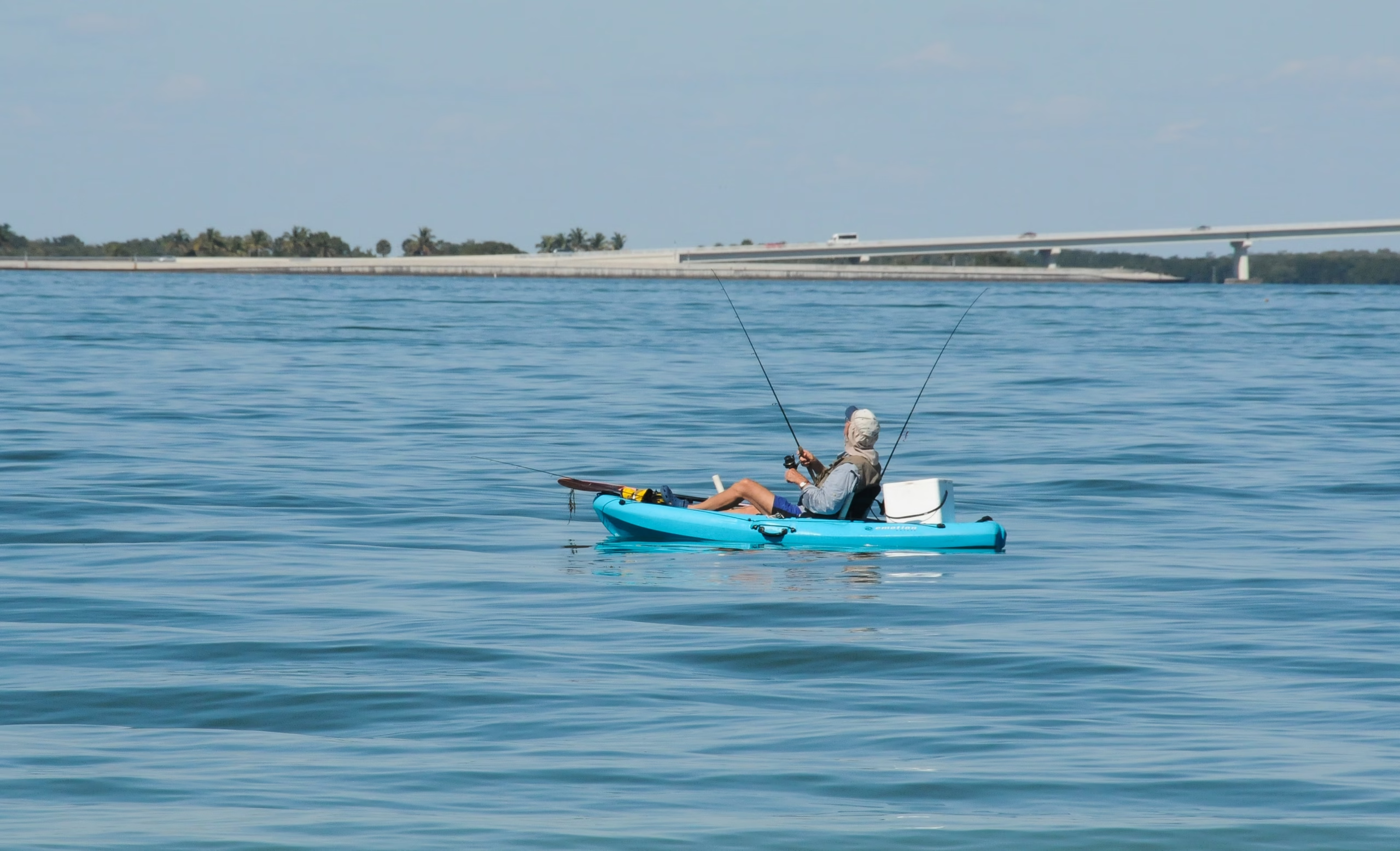
Before buying anything, understand that you need two slightly different setups depending on where you’re fishing:
| Setup Type | Where to Use It | Target Species |
|---|---|---|
| Light inshore setup | Flats, bay, backwater, grass beds, marshes | Redfish, seatrout, snook (inshore), sheepshead |
| Medium saltwater setup | Surf, piers, jetties, passes, nearshore | Pompano, whiting, black drum, bluefish, small cobia |
Setup 1: The Light Inshore Rig
Rod
A 7-foot medium power rod with a fast action tip is the most versatile choice for beginners targeting inshore Florida species. “Medium power” means it can handle fish in the 2–10 lb range comfortably. “Fast action” means the tip bends readily but the backbone of the rod is stiff — good for casting accuracy and setting hooks at distance.
Good starter rods: St. Croix Triumph, Ugly Stik Elite, Penn Battle — all available in the $40–$90 range and built to handle the corrosive saltwater environment.
Reel
A spinning reel in the 2500–3000 size range pairs correctly with a 7-foot medium rod. The number (2500, 3000, etc.) refers to the size class — higher numbers are larger, heavier reels for bigger line and heavier fish. For most Florida inshore species, a 3000 is ideal.
Spend money on the reel, not the rod, when you’re starting out. A $100 reel on a $50 rod will outperform a $50 reel on a $100 rod. The reel’s drag system, ball bearings, and gear ratio all directly affect how you fight and land fish. The Penn Battle III and Shimano Sienna FE are excellent value at $50–$80. The Shimano Stradic FL at $180 is worth every dollar if you fish regularly.
Line: Braided Main Line
Use braided fishing line as your main line. Braid has no stretch, which gives you direct feel of the bite and better hook sets at distance. It also casts farther than monofilament of the same diameter. For the light inshore setup:
- Weight: 15–20 lb braided line
- Color: Low-visibility green or yellow (yellow is easier to see for strike detection)
- Amount: Fill the spool to within 1/8 inch of the lip
Leader: Fluorocarbon
Braid is highly visible in the water. To fool fish, you add a fluorocarbon leader between the braid and your hook or lure. Fluorocarbon is nearly invisible underwater and abrasion-resistant — both critical in saltwater around oysters, barnacles, and sharp fins.
- Weight: 20–25 lb fluorocarbon
- Length: 18–30 inches for most applications (longer in clear water)
- Brand: Seaguar and Yo-Zuri are the trusted standards
Connecting Braid to Fluorocarbon: The FG Knot
The FG Knot is the strongest braid-to-leader connection available and — once learned — is faster to tie than alternatives. It creates a slim profile that passes through rod guides smoothly. Learn this knot; it will serve you for your entire saltwater fishing life. Tutorials are widely available on YouTube. As an alternative beginner knot, the Double Uni knot is slightly easier to learn and still very strong (90%+ strength retention).
Terminal Tackle Options
| Rig Type | Components | Best For |
|---|---|---|
| Popping cork + shrimp | Popping cork, 18–24″ leader, 2/0 hook, live shrimp | Beginners; seatrout, redfish, flounder over grass |
| Jighead + paddle tail | 1/8–1/4 oz jighead, 3–4″ paddle tail soft plastic | Most versatile inshore rig; works on nearly everything |
| Carolina rig | 1/4–1/2 oz egg sinker, barrel swivel, 18″ leader, 2/0 hook | Bottom fishing; redfish, drum, flounder in current |
| Free-lined shrimp | No weight, 1/0–2/0 hook through horn of live shrimp | Clear water, picky fish; the most natural presentation possible |
Setup 2: The Medium Surf/Pier Rig
For fishing from beaches, piers, and jetties where you need to cast farther and punch through surf:
| Component | Specification | Notes |
|---|---|---|
| Rod | 9–10 foot, medium-heavy power | Length helps cast beyond breaking waves; backbone handles current |
| Reel | 4000–5000 size spinning | Larger spool holds more line for longer casts |
| Main Line | 20–30 lb braid | Heavier for surf weight casting |
| Leader | 30–40 lb fluorocarbon or monofilament, 24–36″ | Heavier for abrasion from shells and jetty rock |
| Typical Rig | Knocker rig or fish-finder rig with 1–3 oz pyramid sinker | Holds bottom in surf; see our rigs guide for full setup instructions |
Essential Knots Every Saltwater Angler Needs
| Knot | Use | Difficulty | Strength Retention |
|---|---|---|---|
| Improved Clinch Knot | Leader to hook or lure | Easy | ~85–90% |
| Palomar Knot | Leader to hook (braid or mono) | Easy | ~95–100% |
| Double Uni Knot | Braid to fluorocarbon leader | Moderate | ~80–90% |
| FG Knot | Braid to fluorocarbon leader (slim profile) | Moderate-Hard | ~95–100% |
| Loop Knot (non-slip mono loop) | Gives lures freedom of movement | Moderate | ~90% |
Saltwater Equipment Maintenance
Saltwater corrodes everything. A few minutes of maintenance after each trip extends the life of your gear significantly:
- Rinse rod and reel with fresh water after every trip — focus on the reel’s line roller, handle, and drag knob
- Dry reel before storage — don’t store in a closed case or bag immediately after rinsing
- Check line for damage — run the first 10 feet of leader through your fingers after a day of fishing; nicks, abrasion, or kinks mean it’s time to retie
- Oil reel handle bearings seasonally with a light reel oil (not WD-40, which displaces lubrication over time)
Gear Checklist: Where to Buy
Here is the beginner inshore kit, ready to shop. As an Amazon Associate, we earn from qualifying purchases.
- 7ft medium inshore rod — See inshore rods
- 3000-size spinning reel — Shop reels
- Braided main line (15-20 lb) — Compare braid
- Fluorocarbon leader — See leader
- Circle hooks & swivels — Shop terminal tackle
- Popping corks — See popping corks
- Corrosion-resistant pliers — Browse pliers
Related Fishing Guides
- Saltwater Fishing Rigs: Complete Guide
- Live Bait vs. Artificial Lures: What Works Inshore
- Best Time of Day to Go Saltwater Fishing
- How to Read Tides for Inshore Fishing
- Florida Pompano Fishing: Surf and Pier Tactics