Kayak Fishing for Inshore Species in Florida: The Complete Setup Guide
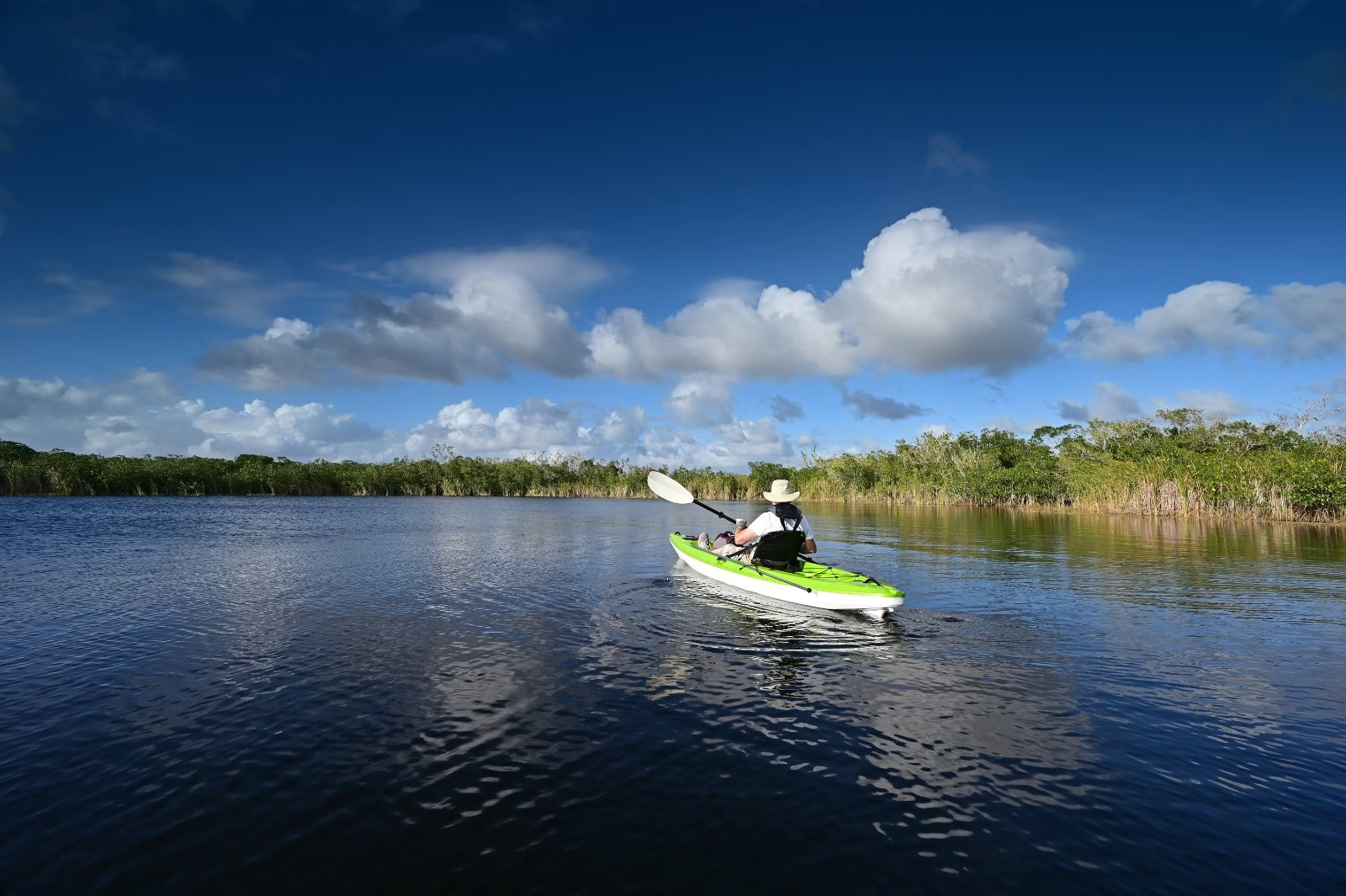
The first time I launched a kayak into a Florida tidal creek at first light, I understood immediately why so many anglers have ditched the center console. A kayak slips into mangrove cuts a skiff can’t reach, putting you within casting distance of redfish tailing in six inches of water. The kayak changed everything about how I experience inshore fishing, and if you haven’t made the switch — or even experimented with it — this guide is going to get you there faster than I did.
Why Kayak Fishing Has Exploded in Florida
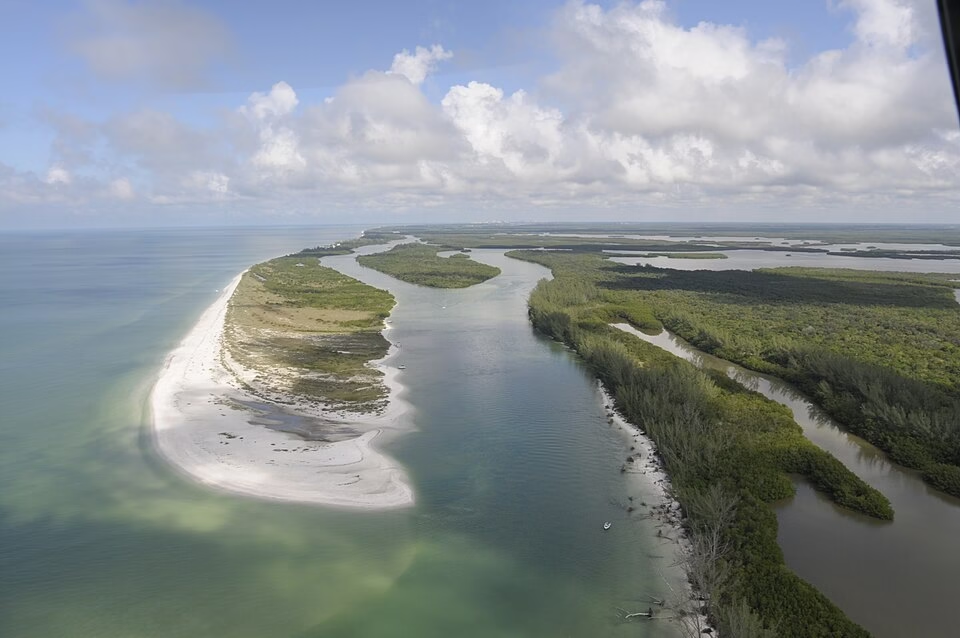
Florida’s inshore fishery is built on shallow, often structure-dense water — mangrove edges, oyster bars, tidal flats, and backwater creeks — that routinely defeats larger boats. Kayaks access all of it. Modern pedal-drive kayaks have eliminated the “paddle and fish” coordination problem, GPS fish finders have shrunk to kayak-mountable sizes, and purpose-built fishing kayaks now come with flush-mount rod holders, live wells, and anchor systems that rival small jon boats. The result is a platform that accesses more water, costs less to operate, and often catches more fish on technical shallow-water targets like redfish and snook.
Choosing Your Kayak: Sit-On-Top vs. Pedal Drive
| Type | Best For | Pros | Cons | Price Range |
|---|---|---|---|---|
| Sit-on-top paddle kayak | Budget entry, calm water, shorter trips | Lightest, simplest, lowest cost, shallow draft | Paddling limits fishing; fatigue over distance | $400–$900 |
| Pedal-drive kayak (propeller) | Open water, longer distances, hands-free fishing | Fast, hands-free, covers distance; great in current | Propeller can snag in seagrass; heavier | $1,800–$3,500 |
| Pedal-drive kayak (fin/flipper) | Shallow flats, seagrass beds, versatility | Handles shallow grass better; quiet operation | Slightly slower in open water than propeller | $1,500–$3,000 |
| Motor-assisted kayak | Long range, wind/current, aging anglers | Electric motor assist; maximum range and ease | Heaviest; battery management; most expensive | $3,000–$6,000+ |
For Florida inshore fishing, a fin-drive pedal kayak hits the best balance between access and capability. Models like the Hobie Mirage Pro Angler or the Old Town Topwater PDL let you pedal through skinny water while keeping both hands free to cast, and they retract when you hit shallow turtle grass. Propeller-drive models like the Wilderness Systems ATAK or Bonafide EX123 are faster in open water but can be frustrating in dense seagrass.
Essential Electronics for Kayak Fishing
The kayak electronics market has grown dramatically. You no longer have to fish blind — properly rigged, a kayak can run a fully functional fish finder, GPS, and trolling motor on a single battery system.
| Electronics Item | Use | Key Feature to Look For |
|---|---|---|
| Fish finder / chartplotter | Bottom contour, fish arches, depth | CHIRP sonar; screen visibility in sunlight |
| Lithium battery (12V) | Powers fish finder and accessories | 20–30 Ah; lithium for weight savings |
| Waterproof phone mount | Navigation, tide charts, FWC regs | Ram Mount or equivalent; secure on flat water and chop |
| Kayak-specific anchor system | Holding position in tidal current | Anchor trolley system; allows 360° repositioning |
Florida Inshore Species: What You’ll Catch
The kayak’s ability to access extremely shallow water opens up the most exciting inshore fishing in Florida — sight fishing for tailing redfish, working mangrove edges for snook, and targeting sheepshead around oyster bar structure that no powerboat can approach quietly.
| Species | Ideal Kayak Habitat | Top Technique | Best Season |
|---|---|---|---|
| Redfish | Shallow tidal flats (6–18 inches) | Sight fishing, weedless gold spoons | Year-round; best fall–spring |
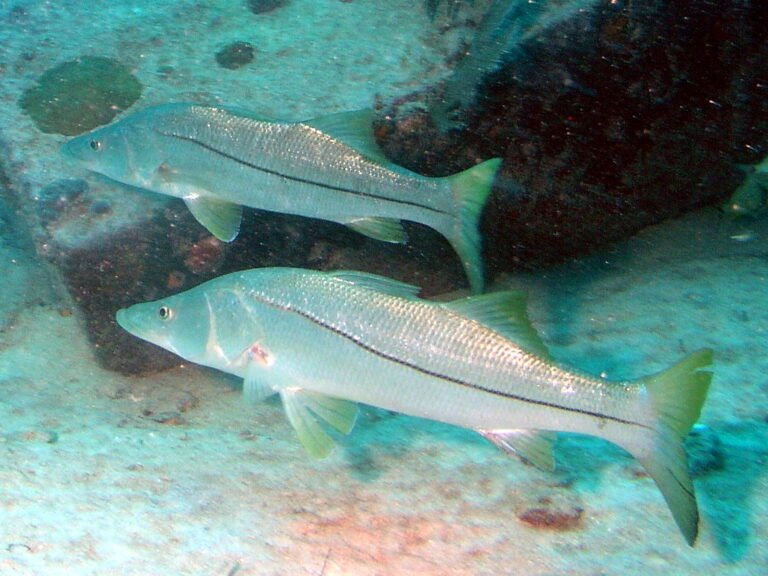
| Snook | Mangrove edges, creek mouths | Walk-the-dog topwater, jerkbaits | Spring and fall (season restrictions apply) |
| Spotted Seatrout | Seagrass flats, tidal cuts | Paddle tail soft plastics on jighead | Year-round; peaks spring and fall |
| Sheepshead | Oyster bars, dock pilings, bridge structure | Fiddler crabs, sand fleas on bottom rigs | Winter–early spring peak |
| Black Drum | Oyster flats, tidal creeks | Crab on bottom; sight fishing tails | Fall through spring |
| Flounder | Sandy bottom drop-offs, creek mouths | Slow-drag paddle tails, live mud minnows | Fall migration (Oct–Dec) is peak |
Where to Launch in Florida: Access Points
One of the great advantages of kayak fishing is that a 70-pound kayak can launch from places a boat trailer never will. Some top kayak-friendly access strategies in Florida:
- County water access parks — most Florida counties maintain free or low-cost kayak launches. Call ahead to confirm current status.
- Bridge shoulders — legal and widely used in many Florida counties; confirm local ordinances before launching
- Campground waterway access — state park campgrounds often provide excellent paddler-specific launch points
- Beach launches — surf launches on Gulf Coast beaches provide immediate access to nearshore and bay fishing
Safety: Kayak-Specific Considerations
- Florida law requires a PFD on board for every occupant; inflatable PFDs are legal and far more comfortable in heat
- A whistle or horn is legally required on kayaks; attach it to your PFD
- After sunset, a white light visible in all directions is legally required
- Always check wind and weather before launching — afternoon summer thunderstorms build fast in Florida
- Tell someone where you’re going and when to expect you back
- Carry a waterproof phone case or VHF radio for emergencies
Gear We Recommend
Here is the gear that makes this easier, ready to shop. As an Amazon Associate, we earn from qualifying purchases.
- 7ft inshore rod — See inshore rods
- 3000 spinning reel — Shop reels
- Braided line — Compare braid
- Fluorocarbon leader — See leader
- Popping cork — Shop popping corks
- Soft plastic jerkbaits — Browse lures
- Fishing pliers — See pliers
Related Fishing Guides
- How to Catch Snook: Florida Inshore Guide
- How to Read Tidal Flats for Redfish
- Sheepshead Fishing Guide: Florida
- How to Catch Spotted Seatrout in the Florida Panhandle
- How to Read Tides for Inshore Fishing