Best Caliber for Wild Hog Hunting (2026): Energy Chart, Bullets & Gear
Affiliate disclosure: Get Out Mor earns a commission when you buy through some links on this page, at no extra cost to you. The cartridge advice below is independent of those links.
Quick answer: for most hog hunters in the South, a .308 Winchester, .30-06 Springfield or 6.5 Creedmoor with a bonded or controlled-expansion bullet is the best all-around choice. It carries enough energy to get through a boar’s shoulder shield out to 200 yards with recoil you can shoot again quickly. Hunting at night over bait with a suppressor? A subsonic .300 Blackout is quiet and effective inside 100 yards if you place shots carefully. Shooting in thick brush at close range? A .350 Legend or a 12-gauge slug hits hard where shots are short.
More hogs are lost to marginal cartridges and cheap bullets than to bad luck. Mature boars grow a dense pad of cartilage and scar tissue over the front shoulders (hunters call it the shield), and they are usually shot in poor light, in cover, often with a sounder scattering around them. The right cartridge-and-bullet pairing is one of the few gear choices that really changes how many hogs you recover.
What matters in a hog cartridge
Three things separate a good hog cartridge from a marginal one:
- Penetration. The bullet has to get through the shield and heavy shoulder muscle and still reach the heart and lungs. Bullet construction matters as much as caliber.
- Energy at your real shot distance. A 150–250 lb boar is tougher than a deer of the same weight. What matters is the energy left at the distance you will actually shoot, not the muzzle number on the box.
- A fast follow-up. Hogs rarely come one at a time. Manageable recoil and a rifle you can cycle quickly often matter more than an extra 200 ft-lb.
Recoil, rifle weight and the second shot
The fastest way to recover more hogs is to be ready for a second shot. A 7–8 lb .308 or 6.5 Creedmoor with a decent recoil pad lets most shooters stay in the scope and see the hit, which matters when a sounder breaks in three directions. A light .30-06 hits harder but kicks harder; a suppressor or muzzle brake tames either, where legal. If you are choosing a rifle mainly for hogs, a shorter barrel (16–20 inches) handles better from a blind or through brush and costs little energy at typical hog distances. Practice from the position you will actually shoot from, whether that is shooting sticks, a bipod on a blind rail or a tree trunk.
How much energy each cartridge carries downrange
The chart compares one widely sold hunting load for each cartridge, using the manufacturer’s published figures, so the comparison is like for like. Your rifle’s barrel length and your exact load will shift these numbers, but the ranking holds.
Two things stand out. First, the .243 and the .350 Legend both clear 1,000 ft-lb at 100 yards, so they are fine hog cartridges at the ranges most Southern hog hunting happens, but the .350 Legend drops off quickly past 150 yards. Second, subsonic .300 Blackout trades most of its energy for quiet. It works on hogs because a heavy, slow bullet that expands reliably still penetrates well, but only with precise shot placement at short range. The 1,000 ft-lb line is a traditional rule of thumb for deer-size game, not a hard limit. Bullet construction and shot placement count for more.
Which cartridge for which hunt
| Hunt | Best picks | Typical shot | Why |
|---|---|---|---|
| All-around daylight hunting, fields and food plots | .308 Win .30-06 Sprg 6.5 Creedmoor |
50–250 yd | Enough energy for a big boar at any sensible distance, with recoil most shooters handle well. Ammo is everywhere. |
| Night hunting over bait, suppressed | .300 Blackout (subsonic or supersonic) .308 Win |
30–100 yd | Subsonic .300 BLK is far quieter under a suppressor, which helps you shoot more than one hog from a sounder. Use .308 where longer shots are possible. |
| Thick brush and swamp edges | .350 Legend .30-30 / .45-70 lever gun 12-gauge slug |
Under 75 yd | Heavy, straight-penetrating bullets for fast, close shots at big boars in cover. |
| Lighter-recoil option for new or young hunters | .243 Win (premium bullet) 6.5 Creedmoor |
Under 200 yd | Light recoil builds good shooting habits. Pair it with a tough bullet and aim behind the shoulder, not through it. |
| AR platform you already own | .223 / 5.56 with 60+ gr bonded or monolithic bullets | Under 100 yd | Works on small and medium hogs with careful shot placement. It is marginal on big boars, so choose a heavier cartridge if big boars are your target. |
Bullet selection matters as much as caliber
A quality bonded, monolithic (solid copper) or controlled-expansion bullet consistently outperforms a cheap cup-and-core soft point against a boar’s shield. Fast-expanding varmint bullets are the most common reason a well-placed .223 fails on a big hog: they break up before reaching the vitals.
- Good choices: bonded soft points, copper monolithics (Barnes TTSX, Hornady CX and similar), and heavy-for-caliber controlled-expansion bullets.
- Avoid for big hogs: thin-jacketed varmint bullets and light-for-caliber loads meant for coyotes.
- Check the regulations: some states and public lands require non-lead ammunition. Copper monolithics cover you everywhere.
Where to aim on a hog
A hog’s vitals sit lower and further forward than a deer’s. The classic aim point is just behind the ear for a head or neck shot at close, steady range, or tight behind the front leg and low in the chest for a broadside heart-lung shot. Quartering shots that angle into the shield from the front need the most penetration, and that is where a premium bullet earns its price.

Gear that makes the cartridge work
These picks are based on published specs, current pricing and long-term owner reviews, not on our own testing. Prices were checked in September 2026 and change often.
| Pick | Best for | Price (Sep 2026) | Skip it if |
|---|---|---|---|
 Vortex Crossfire II riflescope Vortex Crossfire II riflescope |
Budget all-around scope for a .308-class hog rifle | about $125 | You hunt mostly at night; it has no illuminated reticle |
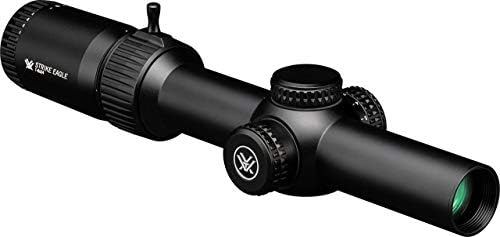 Vortex Strike Eagle 1–6×24 Vortex Strike Eagle 1–6×24 |
Brush and AR rifles: fast at 1x, enough zoom for field edges | about $240 | Your shots are regularly past 250 yards |
 Harris S-BRM 6–9" bipod Harris S-BRM 6–9" bipod |
Steady prone or bench shots over fields and bait | about $118 | You shoot mostly offhand in the woods |
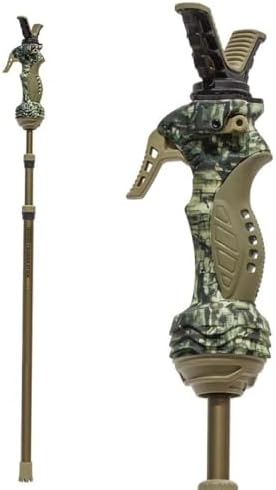 Primos Trigger Stick Gen 3 Primos Trigger Stick Gen 3 |
A standing or sitting rest you can carry and set with one hand | about $70–165 by model | You hunt from a box blind with a shooting rail |
 RIX Storm S2 thermal scope RIX Storm S2 thermal scope |
Entry-level thermal for regular night hunting | about $719 | You hunt only in daylight, or your state restricts night hunting |
Hero pick: if you only buy one thing this season, make it a quality 1–6x or 3–9x scope. More hogs are missed than lost to cartridge choice, and a clear, bright scope fixes more of those misses than any other upgrade.
Check the rules before you go
Hog rules vary widely by state and by land type. Texas, for example, has no closed season or bag limit on feral hogs, and since 2019 no hunting license is needed to hunt them on private land with the landowner’s permission (hunter education still applies). Many wildlife management areas, by contrast, limit weapons, seasons and night hunting. Always confirm night-hunting, suppressor, thermal and ammunition rules with your state agency before the hunt. See our state guides for Texas and Arkansas, and the best hog hunting locations in the U.S.
Frequently asked questions
Is .223 enough for hogs?
For small and medium hogs at close range with a bonded or copper bullet and a precise shot, yes. For big boars, or anywhere you cannot control shot angle, a .308-class cartridge is the more reliable choice.
Is 6.5 Creedmoor good for hogs?
Yes. With a hunting bullet it carries more than 1,800 ft-lb past 200 yards in the load charted above, with noticeably less recoil than a .308.
What is the best cartridge for night hog hunting?
For suppressed rifles over bait, subsonic .300 Blackout is the quietest practical choice inside about 100 yards. Where longer night shots are likely, a suppressed .308 is the better all-rounder.
Do I need special ammo for hogs?
Not special, but better: choose bonded, monolithic or controlled-expansion hunting bullets rather than varmint loads, and check whether your hunting area requires non-lead ammunition.