Redfish Fishing Complete Guide: Florida Rigs, Bait, Spots, and Seasons
Redfish are the inshore saltwater species that ruined me for everything else. Bass, seatrout, snook and flounder are all excellent fish, but few sights in inshore fishing match a 30-inch red tailing on a shallow flat in clear water, taking a well-placed cast, and turning to commit. They’re strong, they’re beautiful, they’re approachable on foot or by kayak, and they’re present in Florida waters year-round. This is the complete guide to catching them.
Redfish Biology: Understanding the Fish
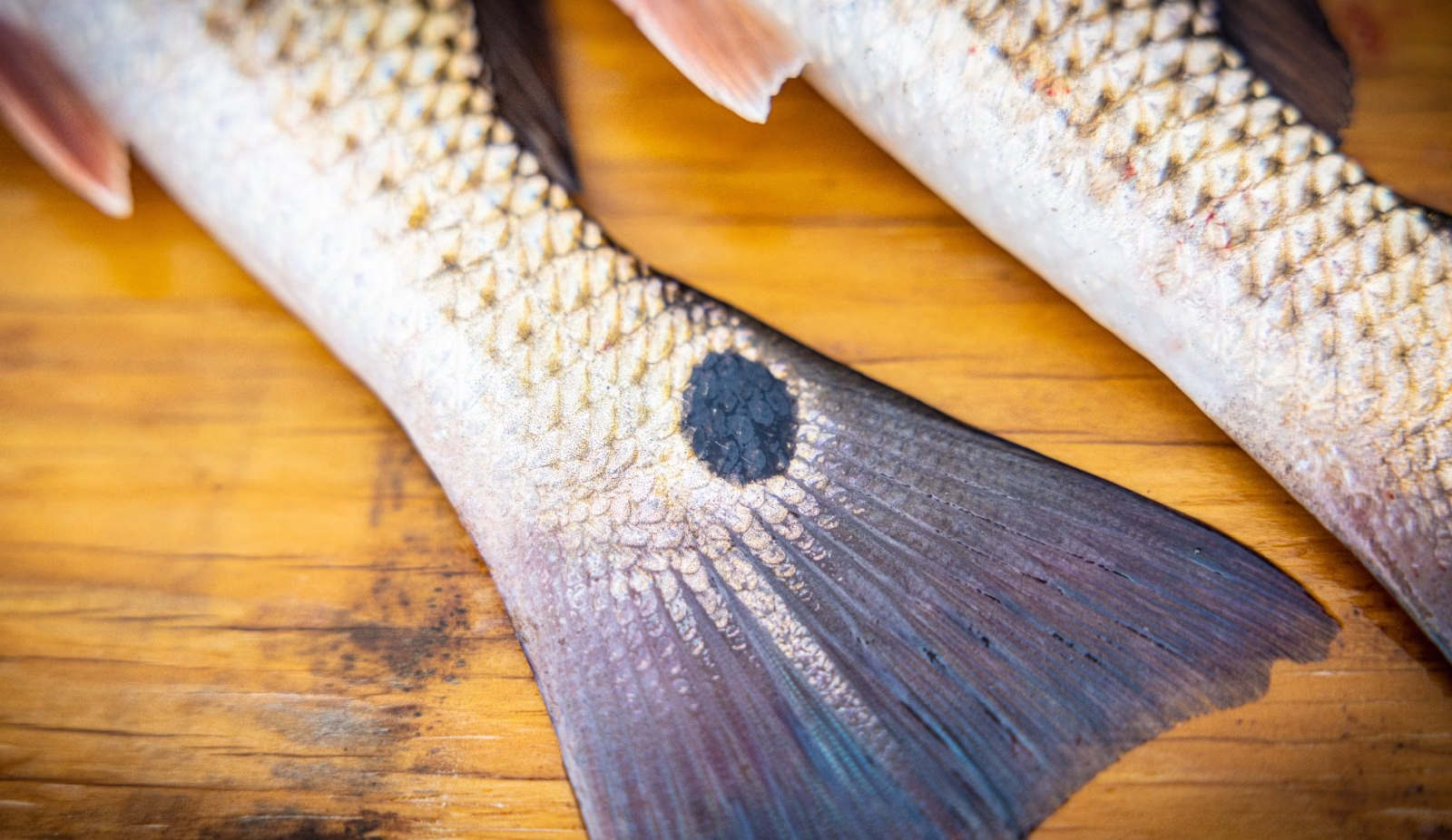
The red drum (Sciaenops ocellatus) — called redfish, channel bass, or bull red depending on where you are — is one of the most widespread inshore species on the Atlantic and Gulf coasts. In Florida, they’re present in every coastal county. Adults are recognized by the characteristic black spot (or spots) near the tail — a false eye thought to direct predators away from the head.
| Life Stage | Size Range | Typical Habitat | Notes |
|---|---|---|---|
| Juvenile (<15 inches) | Under 2 lbs | Backwater creeks, marsh grass, very shallow | Often caught by accident; mostly catch-and-release |
| Slot fish (18–27″ in Florida*) | 3–8 lbs | Inshore flats, oyster bars, grass beds, creek mouths | Legal keeper; prime sight-fishing targets |
| Overslot (>27″) | 8–20+ lbs | Deeper flats, passes, nearshore structure | Must release; these are the spawning fish |
| Bull reds (>30″) | 20–50+ lbs | Passes, nearshore reefs, surf zone | Seasonal aggregations; catch-and-release |
*Florida slot size varies by region — always verify current regulations at myfwc.com for your specific area. Atlantic, Gulf, and Monroe County have different slot rules.
Where to Find Redfish in Florida
Shallow Flats
The defining redfish habitat is the shallow tidal flat — sand, shell hash, and seagrass beds in 6 inches to 3 feet of water. Redfish use flats to feed on crabs, shrimp, and small baitfish. The classic sight-fishing scenario involves finding tailing redfish — fish feeding so shallowly that their tails break the surface — and making a precise cast to place a bait within 2–3 feet of the fish. This is the highest expression of inshore fishing.
Oyster Bars
Oyster bars are productive at virtually every tide. Redfish use them as cover and feeding structure, picking crabs and shrimp from the shells. Fish the edges and the sloughs between bars, especially where moving water creates current seams adjacent to the structure.
Mangrove Shorelines
Redfish use mangrove root systems for both feeding and shade. On hot summer days, reds tuck into the roots during midday and become active again as afternoon shadows push across the water. Casts tight to the roots — within 6 inches — produce far better than casts 3 feet out.
Creek Mouths and Cuts
On falling tides, redfish stack at the mouths of tidal creeks and the cuts between flats where water drains. This is the most predictable redfish fishing in Florida — position yourself at a known drain point at mid-outgoing tide and you will find fish. See our complete guide to reading tidal flats for redfish for detailed structure breakdown.
Seasonal Patterns
| Season | Water Temp | Behavior | Best Approach |
|---|---|---|---|
| Winter (Dec–Feb) | 55–68°F | Concentrated in deeper holes and protected water; less active | Slow presentations; live bait or scented plastics; fish warm periods after fronts |
| Spring (Mar–May) | 65–78°F | Moving back to flats; feeding aggressively after winter | Excellent sight-fishing; gold spoons, paddle tails, topwater at dawn |
| Summer (Jun–Aug) | 82–90°F | Early morning and evening activity; midday retreat to shade | First and last light are critical; topwater at dawn is outstanding |
| Fall (Sep–Nov) | 70–82°F | Actively feeding, building fat reserves; schooling behavior increases | Best overall season; fish are aggressive, schools are findable, conditions are comfortable |
Best Rigs and Presentations
The Weedless Gold Spoon
The 1/2 oz Johnson Silver Minnow (in gold) is arguably the most iconic redfish lure in existence. It’s weedless by design, casts into the wind well, and the fluttering action mimics a fleeing mullet. It shines in shallow grass where other lures would constantly foul. Slow-roll it back just fast enough to maintain the wobble — don’t burn it.
Paddle Tail Soft Plastic on Jighead
A 3–4 inch paddle tail (Berkley Gulp Shrimp, DOA Paddle Shad, Z-Man DieZel MinnowZ) on a 1/8–1/4 oz jighead is the most versatile redfish setup. Works in grass, sand, over shell, on flats, in creeks. Match jig weight to water depth — use lighter heads in shallow water to slow the sink rate.
Popping Cork Rig with Shrimp
A popping cork with a live or fresh shrimp suspended 18–24 inches below is a perfect beginner setup and remains effective in any condition. The cork pops when twitched, attracting fish from distance; the shrimp provides scent and a realistic target. Excellent in grass flats and over oyster bars.
Carolina Rig with Crab or Shrimp
For bottom-oriented reds in current, a Carolina rig (egg sinker sliding to a barrel swivel, 18–24 inch fluorocarbon leader to a 2/0–3/0 hook with a piece of blue crab) presented in a tidal current seam is extremely effective. Let it drift naturally with the tide along channel edges.
Tackle Recommendations
| Component | Flat / Sight-Fishing | Structure / Current Fishing |
|---|---|---|
| Rod | 7′ medium/fast, spinning | 7′ medium-heavy, baitcaster or spinning |
| Reel | 2500–3000 size spinning | 3000–4000 spinning or low-profile baitcaster |
| Main Line | 15–20 lb braid | 20–30 lb braid |
| Leader | 20 lb fluorocarbon, 24–36″ | 25–30 lb fluorocarbon, 18–24″ |
| Hook | 2/0–3/0 wide gap or EWG | 2/0–4/0 circle or J-hook |
Reading Signs: Finding Redfish Without Electronics
Before you ever make a cast, learn to read the water. Redfish telegraph their presence in several ways:
- Wakes — a slow V-wake moving across a flat in the wrong direction for wind is almost always a redfish
- Tails — the classic tailing red, tail breaking the surface as it roots in the bottom for crabs and shrimp
- Nervous water — baitfish skittering across the surface in a localized area indicates predators below
- Mullet pushes — a school of mullet suddenly scattering and jumping is often being pushed by redfish
- Color changes — redfish schools in clear water push a dark shadow across a light sand flat that’s visible from 100 yards with polarized glasses
Always wear polarized sunglasses on the water. Amber or copper lenses for low-light and stained water; grey or green for bright conditions over deep clear water. The ability to see into the water — to see fish rather than surface reflections — is the single biggest advantage an experienced inshore angler has over a beginner.
Gear We Recommend
Here is the gear that makes this easier, ready to shop. As an Amazon Associate, we earn from qualifying purchases.
- 7ft inshore rod — See inshore rods
- 3000 spinning reel — Shop reels
- Braided line — Compare braid
- Fluorocarbon leader — See leader
- Popping cork — Shop popping corks
- Soft plastic jerkbaits — Browse lures
- Fishing pliers — See pliers
Related Fishing Guides
- How to Read Tidal Flats for Redfish, Structure, Tides, and Sight Fishing
- How to Read Tides for Inshore Fishing
- Live Bait vs. Artificial Lures: What Actually Works Inshore
- Saltwater Fishing Rigs: Complete Guide
- Kayak Fishing for Florida Inshore Species
Related Reading
- Kayak Fishing for Inshore Species in Florida
- How to Read Tides for Inshore Fishing
- Live Bait vs. Artificial Lures: What Works Inshore
- Best Time of Day to Go Saltwater Fishing
- How to Set Up a Saltwater Fishing Rig
- More Saltwater Fishing Guides
- Saltwater Fishing Rigs Explained