Black Drum Fishing: How to Target Florida’s Powerhouse Bottom Feeder
Black drum don’t get the respect they deserve. Ask most Florida anglers about inshore fishing and they’ll mention redfish, trout, or snook before they mention black drum. That’s a mistake. Black drum (Pogonias cromis) are large, powerful, widely available, and readily catchable by anglers of all skill levels—and the big ones, the “puppy drum” stage especially, make for excellent table fare.
I developed a genuine fondness for black drum after spending a winter targeting them around the oyster bars and dock pilings of Apalachicola Bay. There’s something deeply satisfying about the thump of a big drum on the line, the slow, bulldozing fight, and the visual spectacle of those distinctive black vertical stripes. They’re an underappreciated fish, and I’m here to change that.
Black Drum Biology
Black drum are members of the drum family (Sciaenidae), making them cousins to redfish, spotted seatrout, and weakfish. Like all drums, they can produce a distinct drumming or croaking sound by vibrating specialized muscles against their swim bladder—a behavior used in spawning aggregations that you can sometimes hear through the hull of your boat.
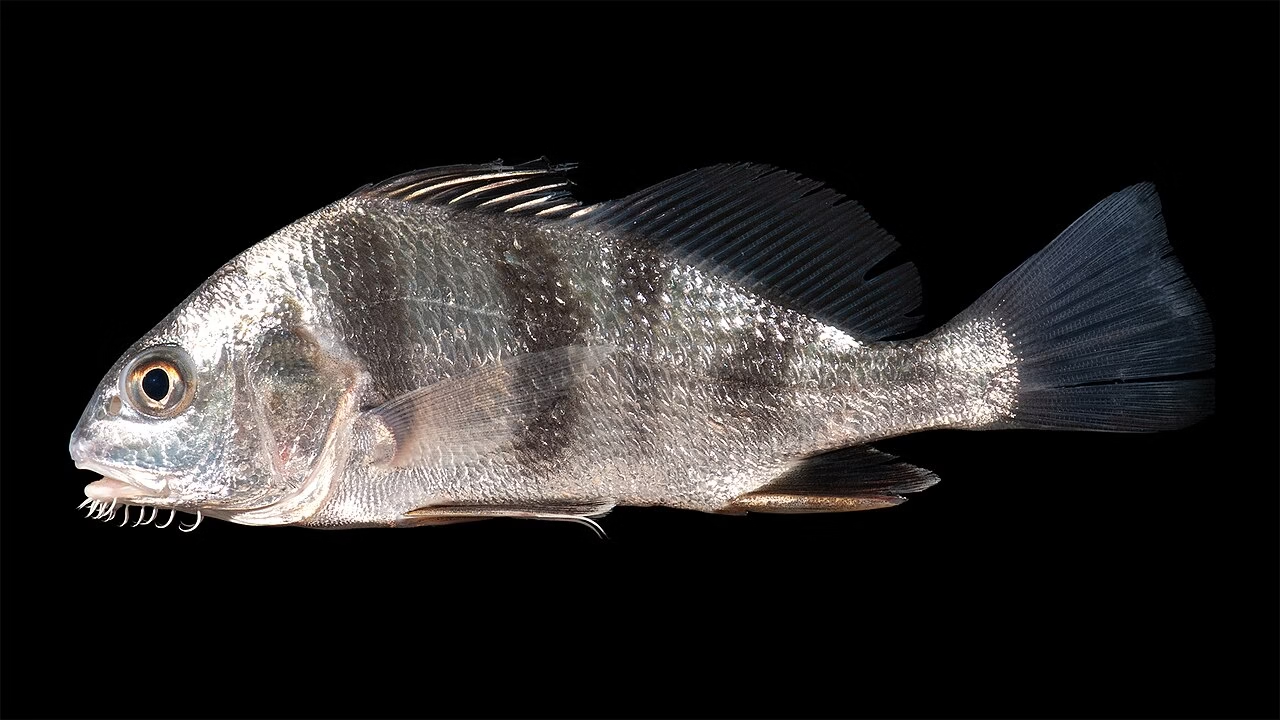
The chin barbels—multiple small whiskers under the lower jaw—are diagnostic for black drum and serve the same olfactory purpose as catfish barbels: finding food in turbid bottom sediments. Black drum are primarily bottom feeders, using their powerful, crushing teeth to eat oysters, mussels, crabs, shrimp, and worms.
Black drum grow slowly but large. Fish in the 30 to 50-pound range are not uncommon in Florida, and fish over 90 pounds have been recorded. However, the best eating comes from smaller fish in the “puppy drum” range of 2 to 10 pounds—larger drum accumulate marine worms and parasites that affect meat quality.
Where to Find Black Drum
Sheepshead share nearly the same structure—pilings, jetty rocks, and oyster bars—and the two species are frequently caught in the same spots on the same tides. Black drum are available throughout the estuaries of Northwest Florida, with particularly strong populations in Apalachicola Bay, Pensacola Bay, and St. Joseph Bay. Key habitat types include:
Oyster reefs and bars: Black drum are oyster specialists. Where you find large oyster reefs, you’ll find black drum feeding on them. The fish root through oyster beds using their chin barbels to locate mussels and small crabs hiding in the shell hash. Tidal flats with extensive oyster structure can hold extraordinary numbers of drum.
Bridge and dock pilings: The barnacles and mussels on pier pilings attract black drum year-round. Fish tight to the structure on a moving tide for consistent results.
Inlets and passes: During winter and spring spawning aggregations, black drum stack in passes and inlets in impressive numbers. The Pensacola Bay system, Choctawhatchee Bay passes, and Apalachicola Bay passes all see significant drum concentrations from January through April.
Nearshore Gulf bottom: Larger black drum move to nearshore Gulf waters during summer, working shell bottom and natural ledges from 10 to 40 feet. Surf anglers targeting big drum at night from Panhandle beaches have found consistent action during warm months.
Seasonal Timing
Black drum fish well year-round in Florida but peak during the winter through early spring spawning season. From December through April, drum congregate in large pre-spawn and spawning aggregations near passes and deep bay areas. This is when some of the largest fish of the year are caught.
During the summer, smaller drum remain on oyster flats and structure throughout the bay. Redfish and black drum often share the same habitat—find one species and you may find both.
Black Drum Tackle and Rigging
Black drum fishing calls for stout gear. Large drum are genuinely powerful fish that will test medium tackle, particularly when they’re near structure. My standard black drum setup is a medium-heavy 7-foot rod with a 4000-series reel, 20-pound braid, and 30-pound fluorocarbon leader. For large drum in passes or surf fishing, go heavier—30-pound main line and 40 to 60-pound leader isn’t excessive for fish over 30 pounds.
Rigging is simple and functional. A fishfinder rig (running sinker above a swivel, 18-inch leader to a circle hook) keeps the bait on the bottom where drum feed. Hook size depends on bait—a 2/0 circle hook for shrimp or small crab, up to 6/0 or 8/0 for cut crab or large baits. Never use J-hooks for drum; the circle hook’s automatic corner-of-mouth hookset is ideal for the way drum mouth a bait.
Best Black Drum Baits
Blue crab is the premier black drum bait and nothing else comes particularly close. Quarter a medium blue crab, crack the claws to release scent, and present it on the bottom near structure. The scent trail from a fresh-cut blue crab will find drum that you’d never have been able to locate by casting alone.
Fiddler crabs are excellent for smaller drum on oyster flats and in back bay areas. Hook them through the shell from beneath and present near oyster bars on a moving tide. Oyster meat fished in place at an oyster bar—pulling a few shells, harvesting the meat, fishing it right there—is highly effective and uses the exact natural food source the fish are already hunting.
Live and fresh dead shrimp are good all-purpose drum baits that produce throughout the year. Sand fleas (mole crabs) work well at beach and pass locations. Cut menhaden (pogies) and fresh-dead mullet are effective large-fish baits for drum in passes and offshore situations.
The Fight and the Table
Big black drum fight more like a snag that breathes than a traditional game fish. They don’t jump, they don’t run spectacular distances—they just go deep and refuse to come up. A 40-pound drum in heavy current is an extended physical contest that will humble you. Smaller fish in the 5 to 15-pound range fight with more energy and are more exciting on lighter tackle.
Smaller black drum are excellent table fish—firm, white, mild-flavored meat that responds well to most cooking methods. Drum almondine, blackened drum, and drum in a court bouillon are classic Louisiana and Gulf Coast preparations. Fish over 15 to 18 pounds develop a stronger flavor and may contain parasitic cysts (not harmful to humans when cooked but unappealing in appearance); most experienced anglers release large drum and keep smaller fish for eating.
Regulations
Florida black drum regulations specify a slot limit (typically 14 to 24 inches) with a bag limit of 5 per angler per day. Check current FWC regulations before your trip. Large breeding females should be released carefully—they’re critical to the population’s reproductive success and carry enormous numbers of eggs.
Black Drum: Quick Reference
| Category | Details |
|---|---|
| Scientific Name | Pogonias cromis |
| Florida Slot Limit | 14–24 inches total length (verify current FWC rules) |
| Bag Limit | 5 per person/day |
| Peak Season | Winter–Spring spawning aggregations (Dec–Apr) |
| Primary Habitat | Oyster reefs, bridge pilings, passes, nearshore Gulf bottom |
| Best Bait | Fresh-cut blue crab — top choice; fiddler crabs, oyster meat, shrimp |
| Best Rig | Fishfinder rig: sliding sinker above swivel, 18″ leader, 2/0–8/0 circle hook |
| Best Tackle | Med-heavy 7 ft spinning, 20 lb braid, 30–40 lb fluoro; heavier for pass fishing |
| Identification | Black vertical stripes on silver body; multiple chin barbels; crushing molar-like teeth |
| Table Quality | Best eating under 15 lbs; larger fish get wormy (harmless but unappealing) |
Black Drum vs. Redfish — Key Differences
Black drum and redfish often share the same habitat, and beginning anglers sometimes confuse the two. Here’s how to tell them apart and how to target each:
| Feature | Black Drum | Redfish (Red Drum) |
|---|---|---|
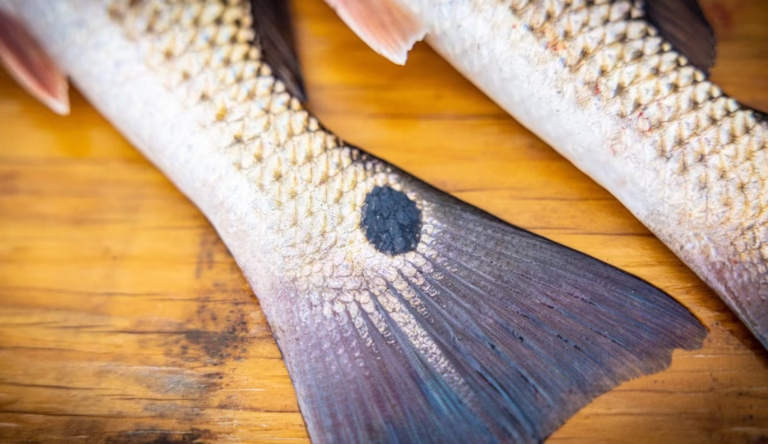
| Color | Silver-gray with black vertical stripes (juveniles); plain gray (large adults) | Copper/bronze with black spot(s) at tail base |
| Mouth | Downturned, bottom-facing; chin barbels present | Downturned; no chin barbels |
| Typical Size | 5–30 lbs common; can exceed 90 lbs | 5–15 lbs inshore; “bull reds” 20–40 lbs nearshore |
| Fight Style | Slow, bulldozing, power runs — doesn’t jump | Hard runs, occasional head shakes — faster and more acrobatic |
| Best Bait | Cut blue crab, oyster meat, fiddler crabs | Cut mullet, live crabs, gold spoons, soft plastics |
| Preferred Depth | Bottom-oriented; channels and structure | Flats, oyster bars, mangrove edges |
| FL Slot Limit | 14–24 inches | 18–27 inches |
Black Drum Tidal Feeding Chart
| Tide Phase | Drum Behavior | Where to Fish | Technique |
|---|---|---|---|
| Incoming (rising) | Move onto flooded oyster flats and shallow structure | Oyster bar edges, marsh drains, shallow bays | Fiddler crab or shrimp on oyster bar margins |
| High Slack | Spread across flat; active feeding | Middle of oyster bars, dock pilings | Cut crab under docks; fiddler crab on flats |
| Outgoing (falling) | Concentrate at drain points and channel edges waiting for bait to wash through | Pass edges, creek mouths, bridge approaches | Cut crab or shrimp on bottom at current seams — often the best action |
| Low Slack | Hold in deeper channel water; reduced activity on flats | Deep channel adjacent to structure | Heavy sinker, cut crab on bottom — fish slow |