Florida Alligator Hunting: The Complete Beginner’s Guide
Watching a gator roll at the end of a snare line explains why people get hooked on this hunt. There is nothing else like it in Florida — a prehistoric animal, a dark cypress swamp, a spotlight beam cutting across black water, and your heartbeat so loud you can hear it. Alligator hunting is one of the most unique and regulated hunting experiences in the United States, and if you’re a Florida resident lucky enough to draw a tag, this guide will walk you through everything you need to know to do it right.
What Makes Florida Alligator Hunting Unique
Florida is home to an estimated 1.3 million wild alligators — the largest population of any state — spread across nearly every freshwater and brackish water habitat in the state. The Florida Fish and Wildlife Conservation Commission (FWC) has managed a public alligator hunting program since 1988, and it’s one of the best-run harvest programs in the country. The season is structured to maintain population health, and every tag issued is backed by population data from FWC biologists.
Unlike most hunting, alligator hunting in Florida is almost entirely a nighttime operation. Gators are most active and most approachable after dark, and the standard technique — spotlighting — relies on the distinctive orange-red eye shine that reflects a flashlight beam from hundreds of yards away. It’s a slow-burn hunt that rewards patience and preparation over reaction time.
Understanding the American Alligator
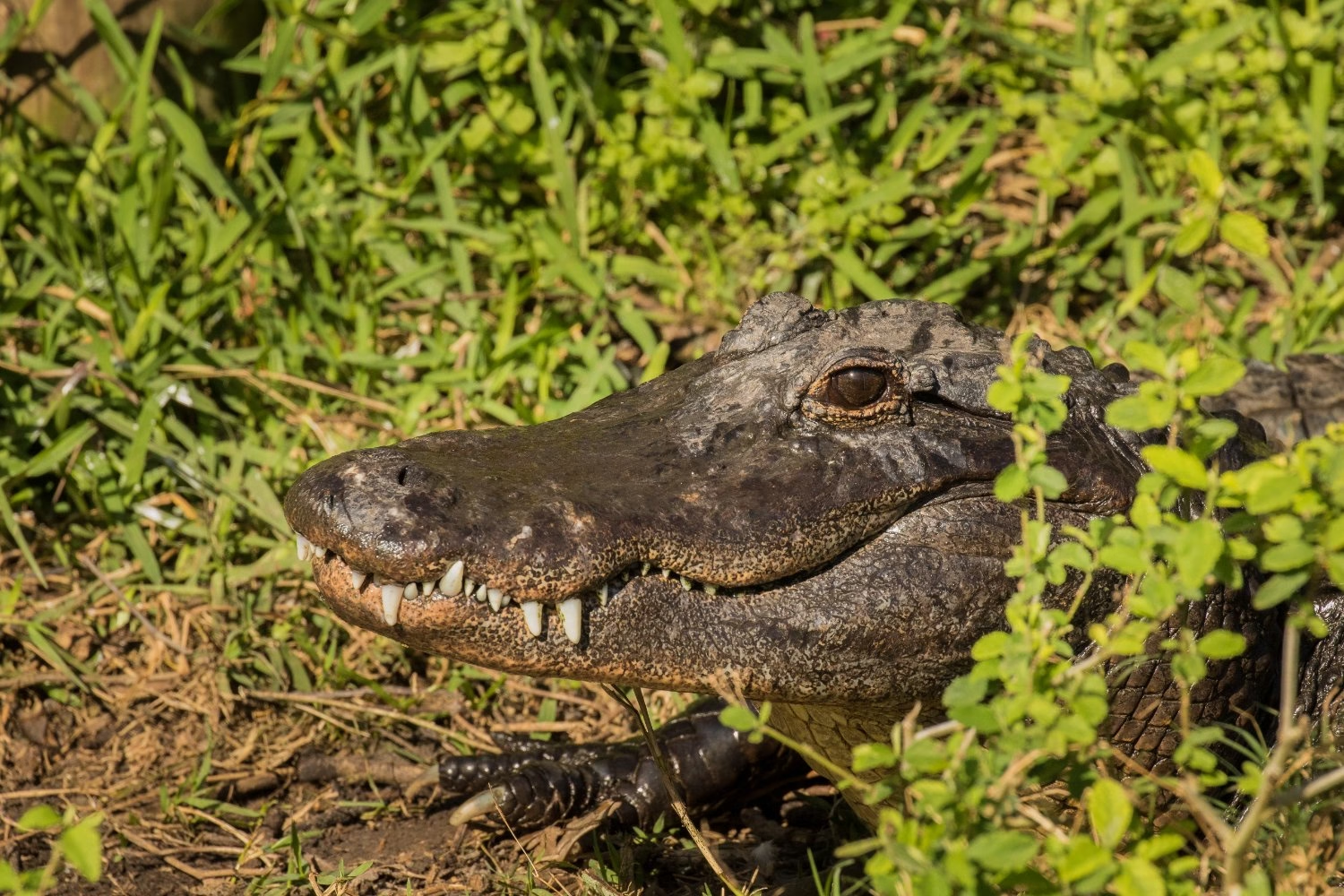
Before you can hunt alligators effectively, it helps to understand their biology. Alligator mississippiensis is an ectotherm, meaning its body temperature is regulated by its environment. This makes seasonal timing and water temperature critical factors in where gators will be and how active they are.
| Season | Water Temp | Gator Behavior | Hunting Implication |
|---|---|---|---|
| Spring (Mar–May) | 65–78°F | Emerging, actively feeding, mating begins | Not hunting season; gators highly visible on banks |
| Summer (Jun–Aug) | 80–90°F | Peak activity, nesting, territorial | Season opens mid-August; gators aggressive and active |
| Fall (Sep–Oct) | 72–82°F | Still active, feeding heavily before cool-down | Prime hunting window; gators predictable and feedable |
| Winter (Nov–Feb) | 50–68°F | Dormant or slow; basking on warm days | Season closed; gators lethargic and hard to approach at night |
Adult male alligators (bulls) in Florida can reach 13–14 feet and over 500 pounds, though most harvested gators in the public program are in the 6–9 foot range. Females are significantly smaller, typically maxing out around 9 feet. Alligators grow slowly — a 9-foot gator is likely 20–25 years old.
Who Can Hunt Alligators in Florida
Florida’s public alligator hunting program is open to any Florida resident who applies through the FWC’s online lottery system. You do not need to own land, have a hunting guide, or possess any prior experience to apply — though experience and preparation make an enormous difference in the outcome.
Non-residents cannot apply for the public program but can hunt through a licensed alligator trapping agent or on private land with proper permits. There is also a private lands assistance program for landowners dealing with nuisance alligators.
To legally harvest alligators in Florida you need:
- A valid Florida hunting license
- A statewide alligator hunting permit (issued by lottery)
- Two CITES tags per permit (issued with the permit)
The Basic Techniques Every Beginner Should Know
Spotlighting
This is the foundation of alligator hunting. A powerful handheld spotlight — minimum 1 million candlepower — is swept slowly across the water’s surface after dark. When the beam hits a gator, its eyes reflect back as two glowing orange or red orbs. The brighter and farther apart the eye shine, the larger the animal. Most experienced hunters can estimate size within a foot just from the eye shine before the boat ever gets close.
Harpoon and Snare
Once a target gator is located and approached quietly, the most common method is throwing a harpoon (a heavy barbed dart attached to a hand line) into the gator’s back or neck to secure it. Once secured, a snare pole or bangstick is used to finish the animal. This requires practice — both the throw and the quiet boat approach. Many first-timers burn their shot by rushing the approach and spooking the gator.
Grappling Hook
In thick vegetation where a harpoon throw is difficult, some hunters use a heavy treble hook on a stout casting rod to snag the gator from a distance. This is a legitimate technique but requires significant upper body strength once you have a large gator on the line.
Crossbow
FWC allows crossbows as legal methods for taking alligators. A bolt equipped with a line and float allows you to secure the gator before getting close. This is particularly useful for hunters who are not confident in their harpoon throw. See our full guide to alligator hunting gear for crossbow setup recommendations.
Safety First: What Beginners Underestimate
Alligators are powerful animals with a bite force of around 2,000 PSI and the ability to thrash violently once secured. Every year hunters are injured — most injuries happen during the dispatch and loading phase, not during the initial approach. Here are the non-negotiable safety rules:
- Never put any part of your body in front of the gator’s jaws — even a “dead” gator can bite reflexively
- Secure the mouth with electrical tape or a rope before loading
- Use a dispatch tool (bangstick) only at point-blank range, pointing away from the boat
- Keep hands behind the neck when handling; never straddle a live gator
- Wear a PFD — nighttime boat accidents are the #1 cause of fatalities on alligator hunts
- File a float plan and check in with someone when you return
Field to Freezer: What Happens After the Harvest
Once you’ve tagged your gator — you must immediately attach a CITES tag to the tail before leaving the water — you’ll need to decide what to do with the animal. Alligator meat is excellent table fare, and a 9-foot gator can yield 30–50 pounds of usable meat. The tail, back straps, and legs are the primary cuts. See our complete guide to processing and cooking alligator meat for step-by-step instructions.
The hide is also valuable. Many hunters send hides to a commercial tannery, and premium Florida alligator leather is sold internationally. FWC has specific requirements for hide tagging and reporting — follow them exactly, as violations carry serious penalties.
Planning Your First Hunt: Practical Checklist
| Task | When to Complete | Notes |
|---|---|---|
| Apply for FWC lottery | Spring (April–June) | Results announced in late June/July |
| Purchase hunting license | Before hunt | Available online at myfwc.com |
| Scout water body | 2–4 weeks before season | Locate gators during daylight hours |
| Assemble and test gear | 1–2 weeks before | Practice harpoon throws on land |
| Confirm boat lighting and safety gear | 1 week before | Navigation lights required; PFDs for all |
| Arrange meat processing | Before hunt | Line up a processor or freezer space |
| Report harvest to FWC | Within 24 hours of harvest | Required by law; done via FWC reporting system |
Choosing Your Water: Where to Hunt
Your permit is linked to a specific FWC management unit — a designated water body or group of water bodies. You can only hunt within your assigned unit during your assigned period. Before the season opens, spend time scouting your assigned water during daylight hours to locate concentrations of gators and understand the habitat. Pay attention to where gators are basking, feeding, and moving between areas.
The best alligator habitat tends to be slow-moving or still water with thick emergent vegetation — cattails, bulrush, hydrilla — along the edges. Cypress heads, oxbows, and shallow bays in larger lakes are productive. Gators prefer areas with both open water for swimming and vegetation for cover.
Should You Hire a Guide?
For your first hunt, seriously consider it. Licensed alligator trapping agents can serve as guides and bring the experience, equipment, and local knowledge that takes most self-guided hunters several seasons to accumulate. The permit is yours to use; the guide brings the boat, gear, and expertise. A guided first hunt is also significantly safer — the guide knows how to handle a large, secured gator in a way that most beginners don’t.
If you go self-guided, at minimum hunt with a partner. Solo alligator hunting at night is genuinely dangerous and not recommended for beginners.
Gear We Recommend
Here is the gear that makes this easier, ready to shop. As an Amazon Associate, we earn from qualifying purchases.
- Bang stick — See bang sticks
- Harpoon & darts — Shop harpoons
- Snare pole — See snare poles
- Heavy rod & reel — Shop combos
- Spotlight — See spotlights
Related Reading
- Florida Gator Season: Dates, Permits, Tags & FWC Application Guide
- Alligator Hunting Gear List: Bang Sticks, Harpoons, Snares & Lights
- Night Hunting for Alligators: Spotlighting Techniques & Safety
- How to Process and Cook Alligator Meat: Field to Table
- Florida Alligator Hunting Rules & Regulations
- All Alligator Hunting Guides & Gear →