Channel Catfish Fishing: Everything You Need to Know
There’s something honest about catfish fishing. No pretense, no expensive gear required, no need to read the tides or study current charts. You put the right bait on the bottom in the right place and you catch fish. It’s pure, accessible, effective fishing—and the result is one of the finest freshwater meals available anywhere in the South.
Channel catfish (Ictalurus punctatus) are the most widely distributed and most commonly caught catfish species in North America. From the small farm ponds of the Florida Panhandle to the deep river channels of the Apalachicola and Choctawhatchee, channel cats are available to virtually every angler in North Florida. They grow large, bite readily, and taste exceptional. There’s a lot to love.
Channel Catfish Identification
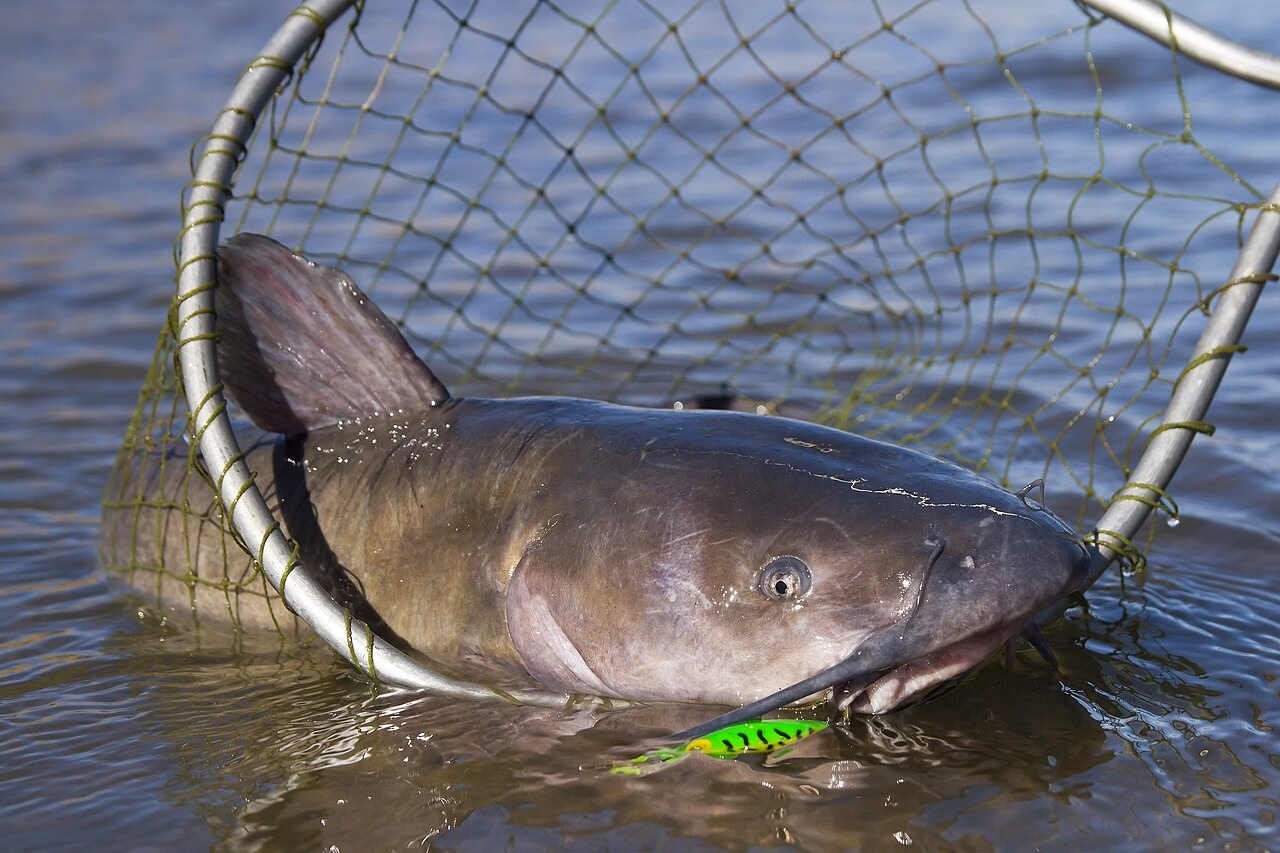
Channel catfish are distinguished from their relatives by several features: a deeply forked tail (blue and flathead catfish have different tail shapes), scattered dark spots on the sides (absent in larger adults), and a slender, streamlined body compared to the massive flathead catfish. Eight barbels—what we call “whiskers”—surround the mouth and serve as sensory organs for finding food in low visibility water.
Those sharp pectoral and dorsal fin spines are worth respecting. A channel cat spine through your hand is painful and, in some cases, can cause infection. Always grip the fish behind the pectoral fins when handling, using the “cradle” grip where your thumb and fingers wrap behind and in front of the pectoral spines.
Where Channel Catfish Live
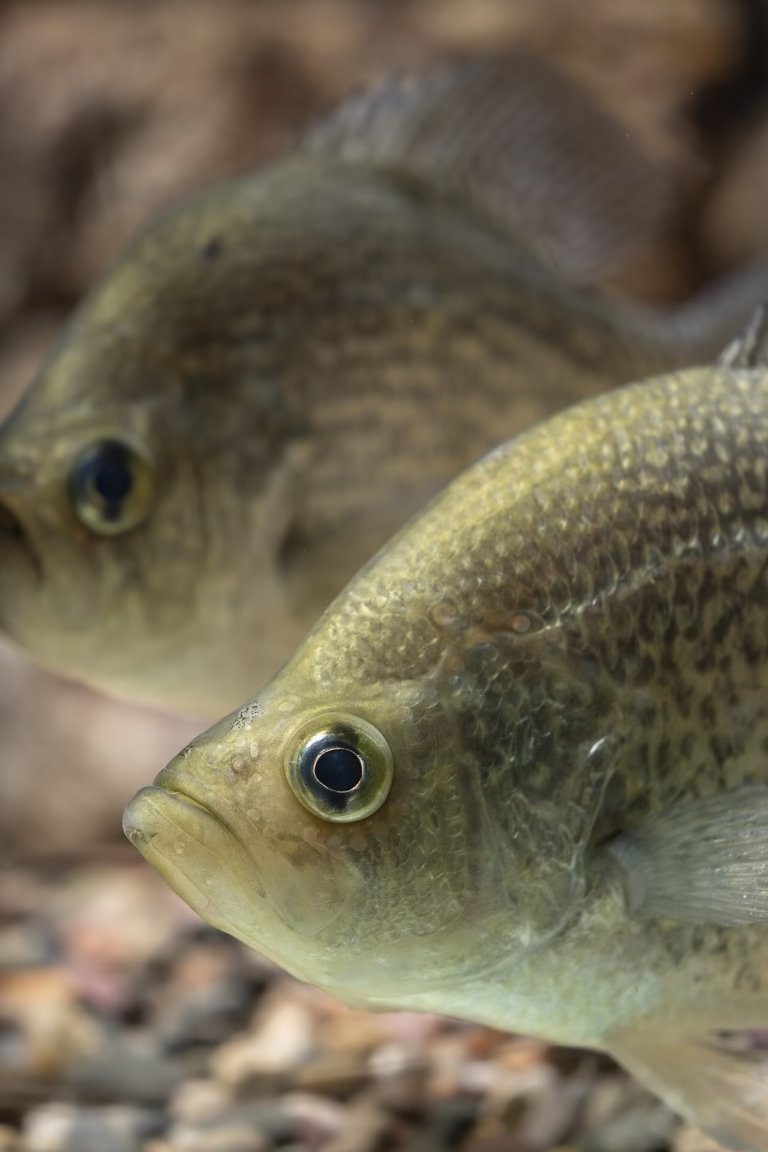
Channel catfish are incredibly adaptable—and often share water with crappie, another species worth targeting on the same North Florida lakes. They thrive in rivers, reservoirs, lakes, ponds, and even slow-moving streams. In North Florida, top catfish waters include:
Apalachicola River: One of the finest catfish rivers in Florida. The deep holes below the Jim Woodruff Dam produce enormous channel catfish, and the river system provides consistent action throughout the year.
Lake Talquin: The same lake that holds great crappie also holds excellent catfish. The river channel areas and deeper lake basins produce channel cats year-round, with the best action from winter through spring.
Choctawhatchee River: This river system, which runs from Alabama through Washington and Walton counties before emptying into Choctawhatchee Bay, holds excellent catfish populations in its deeper holes and bends.
Farm ponds and small lakes: Many North Florida farm ponds have been stocked with channel catfish and produce fish year-round. Some private pond fishing opportunities are exceptional—well-fed pond catfish grow quickly and eat aggressively.
Seasonal Patterns
Channel catfish are year-round fish in North Florida’s relatively mild climate, but activity peaks in spring and early summer as water temperatures warm into the 65 to 75°F range. This is the pre-spawn and spawn period when fish are most active and most concentrated.
The spawn itself happens in early summer (May–June in most North Florida waters) when males establish nesting cavities—undercut banks, hollow logs, rock crevices, drainage pipes—and guard the eggs aggressively. Post-spawn, both sexes feed heavily to rebuild condition.
Summer and fall offer consistent fishing throughout the day and night. Winter slows things down but doesn’t shut them off—catfish continue feeding in deep holes through cold months, just more slowly. A piece of cut bait on the bottom of a 15-foot river hole in January can still produce quality fish.
Night Fishing for Catfish
Channel catfish are primarily nocturnal feeders, and night fishing is often the most productive approach. For river-specific tactics and timing, our Sabine River catfish guide covers structure-based fishing in moving water in detail., especially during summer. Fish move out of deep daytime holding areas into shallower feeding zones at dusk, working the river banks, points, and current edges for food.
Night bank fishing on a river is one of those experiences that gets into your blood. Set out multiple rods, light a small lantern, listen to the river, and wait. When a catfish rod loads up—that slow, heavy bend followed by the drag screaming—there’s nothing quite like it in freshwater fishing.
Catfish Tackle and Rigging
Channel catfish tackle spans a wide range depending on water and fish size. For typical river and lake fishing, a medium-heavy 7-foot rod with a baitcast or spinning reel, 15 to 20-pound monofilament or braid, is completely adequate. For larger fish in heavy current, go heavier.
The standard catfish rig is elegantly simple: an egg sinker threaded on the main line above a swivel, 18 to 24 inches of the same line or fluorocarbon leader, and a circle hook in size 2/0 to 5/0 depending on bait and expected fish size. The sliding egg sinker allows the fish to move with the bait before feeling resistance, improving hookup rates. Circle hooks dramatically reduce deep hooking and are my strong recommendation for catfish—simply reel tight rather than striking hard and the hook sets itself in the corner of the mouth.
Best Catfish Baits
Catfish are olfactory hunters—they find food by smell in low-visibility water. Stinky, natural, protein-rich baits are the most effective.
Cut shad: If you pick only one bait, make it cut gizzard shad. The oily flesh releases scent that carries far in current and triggers channel cats from considerable distances. Fresh-cut is best; don’t leave cut shad sitting in the sun.
Chicken liver: The classic. Incredibly effective for its scent release, though it’s notoriously difficult to keep on a hook. Mesh bait holders or treble hooks help. In ponds and low-current water, chicken liver can produce outstanding results.
Commercial stink baits: Blood bait, punch bait, and dip bait products are designed specifically to release maximum scent. Work particularly well for channel cats in ponds and slow water.
Nightcrawlers and worms: Don’t underestimate a big nightcrawler in a river system. Channel cats feed on natural invertebrates extensively, and a worm presented on the bottom is consistently effective.
Live/cut bluegill: For larger river channel cats, half of a bluegill or a small live bluegill on a circle hook produces the biggest fish.
Table Quality
Few freshwater fish match a properly prepared channel catfish for the table. Smaller fish (12 to 16 inches) are ideal for frying—firm, white, sweet meat with excellent flavor. Larger fish are better suited to baking or grilling. Fried catfish with hush puppies and coleslaw is a North Florida tradition for a reason. Catch and keep within your limits; these fish have been put there to eat.
Channel Catfish: Quick Reference
| Category | Details |
|---|---|
| Scientific Name | Ictalurus punctatus |
| Florida Size Limit | No statewide minimum; check local regulations |
| Bag Limit | No statewide limit on channels; some waters have limits |
| Peak Season | Spring and early summer (65–75°F water); year-round in North FL |
| Primary Habitat | River deep holes, reservoirs, tidal creeks, farm ponds |
| Best Bait | Fresh-cut gizzard shad — top choice; also chicken liver, nightcrawlers, stink baits |
| Best Rig | Sliding egg sinker rig with 18–24″ leader and circle hook (2/0–5/0) |
| Best Time of Day | Night (especially summer); catfish move to shallows to feed after dark |
| Handling Warning | Sharp pectoral and dorsal fin spines — grip behind fins using the “cradle” hold |
| Best North FL Rivers | Apalachicola River, Choctawhatchee River; Lake Talquin reservoir |
The Sliding Egg Sinker Rig — Standard Catfish Setup
This rig allows a catfish to pick up the bait and begin moving before feeling resistance from the sinker — dramatically improving your hookup rate. Pair with a circle hook for automatic corner-of-mouth sets.
Catfish Bait Selection Guide
| Bait | Effectiveness | Best Conditions | Tip |
|---|---|---|---|
| Fresh-cut gizzard shad | ⭐⭐⭐⭐⭐ Best | Rivers, year-round | Fresh-cut is better than old; the oil scent disperses in current |
| Chicken liver | ⭐⭐⭐⭐ Excellent | Ponds, slow water | Stays on hook better with treble hook or mesh bait holder |
| Nightcrawlers (worms) | ⭐⭐⭐ Good | All water types | A big, fresh nightcrawler is reliable in rivers; thread 3–4 on hook |
| Commercial punch/dip bait | ⭐⭐⭐ Good | Ponds, lakes, slow rivers | Use a sponge hook or worm-shaped dip bait plug; reapply frequently |
| Live/cut bluegill | ⭐⭐⭐⭐ Excellent | Rivers, targeting big fish | The best bait for trophy channel cats; also attracts flatheads |