Best Fish Finders for Small Boats, Kayaks & Budget Anglers (2026)
The best value sonar for kayak, jon-boat, and budget anglers in 2026 — chosen by cross-referencing expert testers and what real anglers actually run.
Get Out Mor is reader-supported. When you buy through links on this page we may earn a small commission at no extra cost to you. As an Amazon Associate I earn from qualifying purchases. See our full disclosure.
If you fish from a kayak, a small jon boat, or a tinny — or you just want great sonar without spending tournament money — this guide is for you. We focused on the units that deliver the most depth, structure, and fish-finding ability per dollar for everyday anglers.
Serious competitive anglers run premium forward-facing sonar — Garmin LiveScope, Lowrance ActiveTarget, or Humminbird MEGA Live — a $1,000–$2,500 category of its own. This guide deliberately skips those. If live, real-time imaging is what you want, that is a different buying decision (and a guide we will publish separately).
- Best for small boatsGarmin Striker Vivid 7sv
- Best budgetGarmin Striker 4
- Best for mappingHumminbird Helix 5 CHIRP GPS G3
- Best value comboLowrance Hook Reveal 7
- Best for kayaks & bankDeeper PRO+ 2
How we picked
We do not get paid to place products, and we did not just rewrite a spec sheet. For every unit here we did two things:
1. Cross-referenced the experts. We compared picks across independent testers — Outdoor Life, OutdoorGearLab, Kayak Angler, and others — and kept the units that show up again and again for small-boat and budget anglers.
2. Checked what real anglers run. We read through r/kayakfishing, r/bassfishing, and small-boat forums to confirm these hold up in real use — and to make sure we were not recommending a tournament-grade unit to someone rigging a 12-foot jon boat.
Sources cross-referenced: Outdoor Life · OutdoorGearLab · Kayak Angler · r/kayakfishing & r/bassfishing community threads. Picks reflect consensus for the small-boat / kayak / budget audience — not big-water tournament rigs.
The best fish finders for small boats & kayaks
Garmin Striker Vivid 7sv
A 7-inch bright-screen combo with side + down imaging for jon boats and tinnies.
Pros
- Bright, easy-to-read 7" Vivid color display
- Traditional CHIRP + ClearVü down + SideVü imaging
- Built-in GPS with Quickdraw Contours mapping
Cons
- No preloaded lake maps (you build your own)
- Needs a transducer mount on a small hull
Key features
- Screen: 7" color
- Sonar: CHIRP 2D + ClearVü + SideVü
- GPS: yes (Quickdraw Contours)
- Best use: small powerboats / jon boats
- Tier: Mid-range value
For most small-boat owners this is the sweet spot: a screen big enough to actually read, side and down imaging to map cover, and Quickdraw so you can build contour maps of your home lake as you idle. It is the unit we point first-time buyers toward when they have a transom to mount it on.
Garmin Striker 4
The entry point: real GPS and CHIRP sonar for the price of a couple good rods.
Pros
- Genuinely affordable
- Built-in GPS + Quickdraw Contours
- Dead-simple button operation
Cons
- Small 3.5" screen
- 2D sonar only — no imaging
Key features
- Screen: 3.5" color
- Sonar: CHIRP 2D
- GPS: yes
- Best use: first finder, canoes, small jons
- Tier: Entry-level
If your goal is simply to know depth, water temp, and whether fish are stacked under you — with GPS so you can save spots — nothing beats the Striker 4 on price. It is the classic kayak and canoe starter unit, and it punches well above its cost.
Humminbird Helix 5 CHIRP GPS G3
Compact unit with the cleanest built-in basemap for navigating unfamiliar water.
Pros
- Strong Humminbird Basemap + AutoChart Live
- Crisp, color 5" display
- MicroSD slot for chart upgrades
Cons
- 5" can feel small in bright sun
- Base model has no side imaging
Key features
- Screen: 5" color
- Sonar: CHIRP 2D
- GPS: internal + Basemap
- Best use: anglers who navigate new lakes
- Tier: Mid-range
Helix shines the moment you launch on water you do not know. The Basemap and AutoChart Live give you a usable picture of the lake without buying extra chips, and the 5-inch screen stays crisp. A great pick for anglers who travel to new water often.
Lowrance Hook Reveal 7
Preloaded U.S. inland maps and FishReveal sonar that auto-tunes itself.
Pros
- Preloaded C-MAP US Inland (thousands of lakes)
- FishReveal blends CHIRP + DownScan clarity
- Autotuning sonar — less menu fiddling
Cons
- Interface feels dated next to Garmin
- Pick the right transducer (SplitShot vs TripleShot)
Key features
- Screen: 7" color
- Sonar: CHIRP + DownScan (FishReveal)
- GPS: yes + preloaded charts
- Best use: lake anglers who want maps out of the box
- Tier: Mid-range value
The Reveal is the "works out of the box" option: preloaded maps mean you are navigating the day you unbox it, and FishReveal plus autotuning keep you fishing instead of menu-diving. The best value if you want mapping without building it yourself.
Deeper PRO+ 2
A castable, wireless sonar ball — no boat, battery, or install required.
Pros
- Castable & fully portable (kayak, shore, ice)
- Onboard GPS for shore-based mapping
- No mounting or wiring
Cons
- Relies on your phone screen
- Range and battery are limited vs fixed units
Key features
- Type: castable wireless sonar
- Display: your phone (free app)
- GPS: yes (shore mapping)
- Best use: kayak, bank, and ice anglers
- Tier: Entry-level
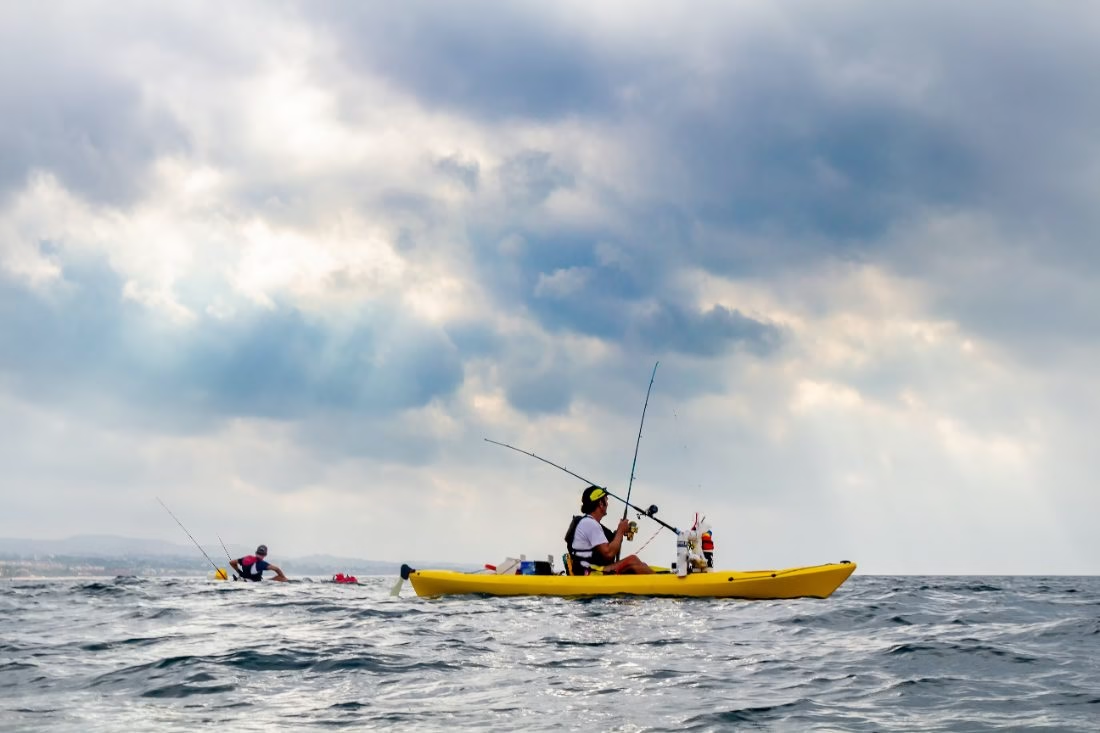
For kayak, float-tube, and bank anglers, a fixed-mount unit is overkill. The Deeper casts out on your line or a float, scans, and sends a clean picture to your phone — with GPS mapping for shore spots. It is the most flexible sonar for people who do not fish from a rigged boat.
How to choose a fish finder (for a small boat or kayak)
Screen size
On a small boat, 5 to 7 inches is the practical range. Bigger is easier to read but eats space and battery; 3.5" is fine on a kayak where the unit sits a foot from your face.
Imaging vs. 2D
Plain 2D CHIRP tells you depth and marks fish. Down and side imaging draw a near-photographic picture of cover — worth it if you fish structure, skippable if you mostly want depth and waypoints.
Maps: preloaded or build-your-own
Lowrance Hook Reveal ships with thousands of lake maps. Garmin Striker units start blank but let you build contours with Quickdraw. If you fish new water often, preloaded wins.
Power & mounting
Even small units need a 12V battery and a transducer mounted straight. Kayakers should plan a sealed battery box; bank anglers can skip all of it with a castable Deeper.
FAQ
Premium forward-facing sonar — Garmin LiveScope, Lowrance ActiveTarget 2, or Humminbird MEGA Live 2 — usually paired with 10"+ screens. That is a $1,000+ category and overkill for most anglers, which is why it is not in this small-boat guide.
It is worth it. GPS lets you drop and return to waypoints (brush piles, drop-offs) and, on Garmin/Lowrance, build or load maps. Every pick above includes it.
Yes — the Garmin Striker 4 and Deeper PRO+ 2 are the easiest kayak setups. The Striker mounts small; the Deeper needs no install at all.
Bottom line
For most small-boat and kayak anglers, the Garmin Striker Vivid 7sv is the best all-around pick, the Garmin Striker 4 is the budget hero, and the Deeper PRO+ 2 is unbeatable for bank and kayak fishing. Match the unit to how you actually fish and any of these will put more fish in the boat.
Full reviews of our picks: Garmin Striker Vivid 7sv, Garmin Striker 4, and Lowrance Hook Reveal 7.