The Bass Feeding Cycle: How Water Temperature Controls Everything
Water temperature is the single most important variable in bass fishing — more than moon phase, barometric pressure, or what color jig you tied on last night. Get a handle on how temperature drives a largemouth’s biology, and you’ll start making decisions that actually put fish in the boat instead of burning a full tank of gas guessing.
Why Bass Are Slaves to the Thermometer
Largemouth bass (Micropterus salmoides) are ectotherms — cold-blooded animals whose internal body temperature tracks the temperature of the surrounding water almost exactly. Unlike mammals, bass don’t burn calories to maintain a set body temperature. What that means practically: when the water is cold, their metabolism slows down. When it’s warm, it speeds up. Everything — digestion speed, swimming performance, aggression level, and how often they need to eat — is dictated by that one number on your thermometer.
Research published on ScienceDirect on largemouth bass thermal performance and growth parameters confirms that optimal growth occurs between 26–29°C (roughly 79–84°F), where metabolic processes fire most efficiently. But “optimal growth” and “optimal catching” aren’t quite the same thing. Anglers care most about the window where bass are actively hunting and striking — and that sweet spot runs a bit cooler, from about 65–75°F, where aggression peaks before the fish shift toward heat-management behaviors.
The flip side is just as important. When water climbs above 35°C (95°F), the aerobic scope of northern largemouth bass collapses — resting metabolic rate rises faster than maximum metabolic rate, meaning the fish literally can’t sustain high activity. They’re burning energy just sitting still. That’s why August midday fishing in the shallows is mostly a waste of time.
Think of it this way: bass metabolism is a dial, and water temperature is the hand that turns it. Your job as an angler is to know where that dial sits, then fish accordingly.
The Feeding Cycle by Temperature Band
Here’s the full picture, from ice-off conditions through the brutal heat of summer:
Below 50°F — Near Dormancy
At this range, bass have checked out. Their digestion slows to a crawl — a meal that would be processed in hours at 70°F might sit in a bass’s gut for a day or more at 45°F. They hold on deep structure: channel edges, submerged points, laydowns at maximum depth. They’re not chasing bait. They’re not going to chase your crankbait either.
These fish are opportunistic at best. If something drifts right in front of their nose, they might eat it. That’s the entire game plan — drag-and-pause finesse presentations. A drop shot or shaky head worked agonizingly slow over a deep channel bend is about as good as it gets. Patience matters more than skill in this range.
50–55°F — First Signs of Life
This is the thaw. Bass are waking up but still running at reduced capacity. They’ll start moving off the deepest structure toward secondary points and transitional areas. Feeding picks up, but presentations still need to be deliberate. Slower jigs, finesse swimbaits on light line, and hair jigs all work here. Don’t burn the bait.
55–65°F — Spawn Trigger Window
This is one of the most important temperature ranges to understand, and it’s also where most anglers misread what’s happening.
Bass spawning behavior is triggered by a combination of two cues: rising water temperature and increasing daylight hours. Research from the PMC (National Library of Medicine) on out-of-season spawning confirms that photoperiod — the lengthening of daylight in spring — plays a critical role alongside temperature. This is why you can have a warm snap in January and not see bass on beds. The light signal has to align with the temperature signal.
In practical terms, as water hits 55–60°F in spring, bass are in active pre-spawn mode. They’re feeding heavily — putting on weight before the energy demands of reproduction. These fish are aggressive and they’re staging on the first significant structure outside spawning flats: secondary points, the ends of dock rows, rock transitions leading to gravel. This is prime time for reaction baits. Squarebill crankbaits, swimbaits, and bladed jigs all work because the fish are actively chasing forage.
As temps climb into the 60–65°F range, fish push onto the beds. According to Bassmaster and confirmed by tournament results across decades of fishing, 60–65°F is the reliable spawn trigger temperature. Kevin VanDam, one of the most analytically-minded pros to ever compete at the highest level, has noted repeatedly that he watches temperature at spawning depth — not surface temps — because that’s what the fish are actually experiencing.
Once bass are on beds, traditional feeding is suppressed. They’re in protection mode, not feeding mode. Presentation becomes about triggering a defensive strike rather than a hunger strike.
65–75°F — Prime Feeding Window
This is it. If you had to pick one range to be on the water, this is it.
Post-spawn bass — especially females that have recovered from the energy expenditure of spawning — enter an aggressive feeding phase. The metabolism is running hot but not yet stressed. Digestion is fast, which means bass need to eat more frequently. Forage is abundant as shad and bluegill are also in their peak activity ranges.
Bass in this range will chase. They’ll hit topwater. They’ll crush a swimbait burning over grass. As pro angler Kevin VanDam has noted in Bassmaster coverage over the years, the 65–75°F window produces some of the most aggressive reaction bites he sees all season. Frog fishing on matted vegetation, walking baits over flats, and lipless cranks on points all shine here.
This is also the range where bass fishing lures selection opens up the most — you’re not locked into finesse tactics, and fish will commit to nearly any well-presented bait that matches local forage.
75–85°F — Summer Patterns Setting In
Bass are still active in this range but behavior starts shifting. Feeding windows compress toward early morning and late evening. During the day, fish push to deeper structure — points, humps, channel bends — or to shade and current where temperature is moderated.
Thermocline development begins to influence fish position significantly in this range (more on that in the next section). Topwater bites can still be exceptional at dawn, but midday fishing requires going deeper and slower, or targeting shaded areas.
85–90°F — Thermal Stress Begins
Surface temperatures in this range push bass to deep structure and below the thermocline. Feeding windows shrink to roughly dawn and dusk, with some night fishing becoming productive in consistently hot climates. Shad schools have moved deep, and bass follow.
Heavy cover and current breaks become key in rivers and impoundments with flow. Shade matters — a dock shadow at 90°F surface temps might hold fish all day when nothing else will.
Above 90°F — Metabolic Distress
At surface temperatures above 90°F, shallow water bass face genuine metabolic stress. Research on largemouth bass thermal tolerance confirms that at 35°C+ (95°F+), aerobic scope collapses — the fish’s maximum metabolic capacity is increasingly consumed just by maintaining basic functions at rest.
Bass in this range hold in the deepest available cool water or on strong current breaks that deliver oxygenated, cooler flow. Fishing is largely unproductive unless you can find the thermocline layer or exploit brief early-morning windows before surface temps spike.
Temperature Reference Table
| Water Temp Range | Bass Metabolic State | Depth / Location | Behavioral Mode | Best Technique |
|---|---|---|---|---|
| Below 50°F | Near-dormant, very slow digestion | Deepest structure: channel edges, submerged points | Opportunistic only — not actively hunting | Ultra-slow finesse: drag-and-pause drop shot, shaky head |
| 50–55°F | Sluggish but waking | Deep to mid-depth transitional areas, secondary points | Occasional feeding, not aggressive | Slow jig, finesse swimbait, hair jig |
| 55–60°F | Pre-spawn ramp-up, increasing activity | Staging areas near spawning flats, secondary structure | Active pre-spawn feeding, aggressive | Squarebill crankbait, swimbait, bladed jig |
| 60–65°F | Peak spawn trigger, protective mode | Shallow gravel/hard bottom flats, beds | Bed defense strikes, limited feeding | Slow bed presentations, Ned rig, flipping jig |
| 65–75°F | Optimal activity, fast digestion | Flats, points, grass edges, all depths | Aggressive post-spawn feeding, reaction strikes | Topwater, frog, lipless crank, swimbait, jig |
| 75–85°F | Active but heat-aware | Deep structure, shade, early-morning shallows | Dawn/dusk feeding, daytime structure-holding | Deep-diving crank, Carolina rig, drop shot, morning topwater |
| 85–90°F | Thermal stress building | Below thermocline, current breaks, shaded docks | Compressed feeding windows (dawn/dusk) | Night fishing, slow deep presentations, flipping shade |
| Above 90°F | Metabolic distress | Deepest cool water, strong current | Survival mode — minimal feeding | Early-morning only or target thermocline depth |
Summer Stratification: It’s Not Just Temperature — It’s Oxygen
Here’s where a lot of anglers get it wrong: in summer, they assume bass go deep because of heat. That’s only half the story. The other half is oxygen.
Starting mid-to-late summer, most lakes stratify into distinct layers:
- Epilimnion: The warm upper layer. Sunlight-heated, well-oxygenated, but uncomfortably hot for bass during peak summer.
- Thermocline: The transition zone where temperature drops sharply over a short vertical distance. This layer contains the critical interface bass relate to.
- Hypolimnion: The cold bottom layer. In summer, this zone becomes oxygen-depleted as decomposing organic matter consumes available oxygen. Bass physiologically cannot survive in the hypolimnion for long — there simply isn’t enough dissolved oxygen.
The practical result: bass are squeezed. Too hot in the shallows, too low on oxygen at the bottom. They suspend just above the thermocline or push to areas where current, wind mixing, or vegetation oxygenates the water column.
This is why finding the thermocline is one of the most valuable skills in summer bass fishing. A quality fish finder makes this straightforward — look for a defined layer where the temperature drops sharply, often visible as a slight color change or density line on your sonar. Baitfish clouds on the screen frequently mark the thermocline, and bass won’t be far below them. A quality unit from our best fish finders for 2026 guide can display water temperature at depth and help you identify exactly where the thermocline sits on a given day.
According to BassResource.com and confirmed by MidWest Outdoors coverage, the thermocline depth can shift daily based on wind mixing and cloud cover — it’s not a fixed layer. Check it each trip, and don’t assume yesterday’s depth is today’s depth.
The Cross-Section: Where Bass Live Across the Seasons
Winter: Cold-Water Torpor and the Patient Game
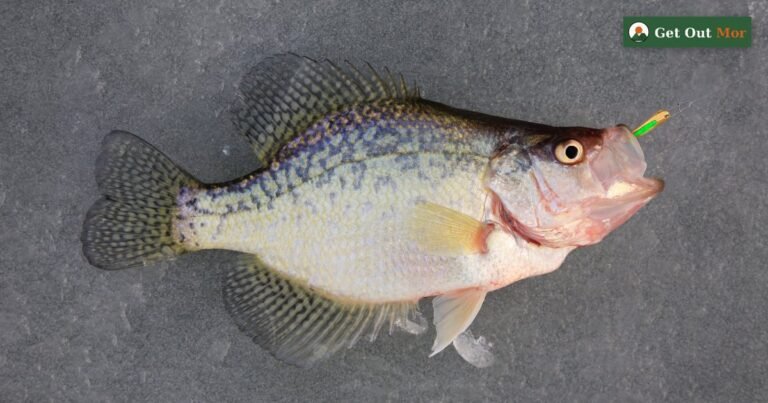
Once water drops below 48–50°F, bass enter what fisheries biologists sometimes describe as a torpor-like state. The same thermal slowdown governs crappie, which often suspend deep off vertical structure through the coldest months. They’re not technically dormant — they’ll still feed — but every behavioral indicator points toward maximum energy conservation.
They stack on deep structure: main channel edges, the tips of long points where they drop into the deepest basin, submerged timber at maximum depth. According to research and reporting from Field & Stream on cold-water bass, these fish don’t pursue prey. A shad that dies and falls directly past a winter bass might get eaten. That same shad darting 10 feet away won’t even get a look.
The tactical prescription is unambiguous: slow down more than you think you need to, then slow down more. A drop shot worm on light fluorocarbon, barely moved, sits in the strike zone longer than any other technique. Drag it three inches, pause for ten seconds, drag it three more inches. That’s the whole technique. Most anglers can’t do it — they speed up when they’re not getting bites, which makes the problem worse.
How to Use Water Temperature to Predict Bass Location and Behavior
Knowing the ranges above is only useful if you’re measuring. Here’s the practical workflow:
Carry a thermometer, or let your electronics work. A cheap stick thermometer clipped to your livewell beats guessing. Better yet, a quality fish finder with a temperature sensor gives you surface temp at a glance and can help you identify thermocline depth in summer. Check our best fish finders for 2026 for units that make thermocline identification straightforward.
Measure at depth, not just the surface. In spring, surface temps can run 5–8°F warmer than the water over spawning beds in direct sunlight. In summer, the thermocline can create a difference of 15°F or more between surface and 20-foot depth. The fish care about their water temperature, not yours.
Use temperature transitions as ambush points. Areas where warm and cool water meet — current seams, the shaded side of a point, the edge of a grass bed — concentrate baitfish and, by extension, bass. These are micro-thermoclines, and they’re worth fishing thoroughly.
Adjust technique before you adjust location. When bass stop responding to a fast presentation, slow down before moving. Temperature-driven feeding suppression looks a lot like the fish have relocated. Often, they’re still there — just not willing to chase.
Track temperature changes over days, not just hours. A 3°F rise over three days is more meaningful to bass behavior than a 3°F swing over three hours. Sustained warming trends in spring trigger pre-spawn feeding rushes. Sustained cooling trends in fall trigger the same aggressive feeding as fish prepare for winter.
Pair your temperature knowledge with smart lure selection for bass — the right temperature range unlocks the right presentation, and having the right bait tied on when the fish are in their prime window is how limits happen instead of slow days.
FAQ
Q: What is the best water temperature for bass fishing?
A: The 65–75°F range is widely considered the prime feeding window for largemouth bass. In this range, metabolism is running efficiently, digestion is fast so fish need to feed frequently, and aggression is at its highest. Bass will chase reaction baits, commit to topwater, and feed throughout more of the day rather than just at dawn and dusk.
Q: Do bass stop eating when water is cold?
A: Not completely, but feeding slows dramatically. Below 50°F, bass are near-dormant and will only strike something presented directly in front of them with a very slow presentation. They won’t chase. Finesse techniques — drop shot, shaky head, drag-and-pause — fished slowly over deep structure are your best options in cold water.
Q: Why do bass go deep in summer?
A: Two reasons, and both matter. First, surface temperatures above 85–90°F create thermal stress — bass can’t sustain activity in that heat. Second, and critically, summer lake stratification creates a layer of oxygen-depleted water at depth (the hypolimnion). Bass can’t survive in low-oxygen water, so they’re forced to suspend just above the thermocline where dissolved oxygen is still adequate. It’s not just temperature — it’s oxygen.
Q: What temperature triggers bass to spawn?
A: Spawning is triggered by a combination of temperature and photoperiod (daylight length). The reliable spawn trigger temperature is 60–65°F at the bed depth. However, bass don’t spawn just because it gets warm — they also need the lengthening spring daylight signal. This is why a warm spell in late winter doesn’t put bass on beds. Both cues have to align.
Q: How do I find the thermocline with a fish finder?
A: Look for a defined horizontal band where the sonar image shows a slight density or color change — this is where the temperature drops sharply. Baitfish clouds often mark the thermocline exactly, appearing as a dense horizontal smear on the screen. Bass will typically suspend just above this bait layer. Some fish finders with temperature sensors can display water temp at various depths, making the thermocline obvious on a graph.
Q: Does barometric pressure matter more or less than water temperature?
A: Water temperature sets the baseline for bass behavior — it’s the fundamental driver of metabolism and activity level. Barometric pressure causes short-term behavioral changes within that baseline. A dropping barometer can trigger a feeding flurry, but if water is 42°F, that flurry is still going to be sluggish. Think of temperature as the volume knob and barometric pressure as the channel selector — you need both, but temperature sets the ceiling on what’s possible.
Read Next
- Best Bass Fishing Lures: What Actually Works by Season
- Best Fish Finders 2026: Find the Thermocline, Find the Fish
- Best Baitcasting Reels Under $100 in 2026