How to Clean and Fillet a Largemouth Bass
Filleting a bass isn’t complicated, but doing it right — with minimal waste and maximum meat — takes the right knife, the right technique, and knowing a few tricks most people skip. Here’s exactly how to do it.
What You’ll Need
Before you touch the fish, get your station set up. Chasing down tools mid-process means touching handles with bloody hands and slowing everything down.
- 6–8″ flexible fillet knife — sharp. A dull knife is the number one cause of wasted meat and cut fingers. Sharpen it before you start.
- Non-slip plastic cutting board — plastic sanitizes easier than wood. Rinse it with cold water first.
- Needle-nose pliers or fish tweezers — for pin bones
- Bowl of ice water — to hold finished fillets
- Paper towels — for grip and cleanup
Keep the fish on ice or in a livewell until you’re ready to clean it. The moment you pull a fish, the clock starts on quality.
Before You Fillet: Size, Yield, and What to Keep
Not every bass is worth cleaning. Knowing what size fish gives you a usable fillet — and which ones you should release — makes you a better angler and better steward of the fishery.
Bass Fillet Yield by Size
| Bass Size (inches) | Approximate Weight | Two-Fillet Yield (oz) | Servings |
|---|---|---|---|
| 12″ | ~0.75 lb | 3–4 oz | 1 (light) |
| 14″ | ~1.25 lb | 5–7 oz | 1–2 |
| 16″ | ~1.75 lb | 8–10 oz | 2 |
| 18″ | ~2.5 lb | 12–14 oz | 2–3 |
| 20″ | ~3.5 lb | 15–18 oz | 3–4 |
The sweet spot for eating is the 12–15″ range. These fish are big enough to produce a real fillet, haven’t had years to accumulate contaminants in their fat tissue, and tend to have more tender, better-flavored meat. Oklahoma Wildlife and several culinary sources consistently point to this size class as the best table fare.
Always check local regulations before keeping any bass. Minimum size limits vary by state and by specific body of water. Texas, for example, sets a general statewide minimum of 14 inches for largemouth bass — but tournament waters and special-regulation lakes often differ. Look it up before you go, not after.
Ethics and Selective Harvest
This needs to be said plainly: release the big ones.
Bass over 15 inches — and especially anything pushing 18″+ — are the most reproductively valuable fish in the population. A 5-pound bass is a 10-to-15-year-old fish. It took a long time to get there and produces significantly more eggs per spawn than a smaller fish. Taking it off the water for a single meal is a poor trade for the fishery.
Selective harvest — keeping legal-sized fish in the 12–15″ range and releasing the rest — is how anglers maintain quality bass fishing over the long term. It’s not just good ethics. It’s practical. The lakes that produce big fish consistently are the ones where anglers make smart decisions about what goes in the cooler.
A few principles worth following:
- Know your local regulations and the specific limits for the water you’re fishing
- Target the 12–15″ slot for table fare when regulations allow
- Release fish over 15″ whenever possible, especially in smaller lakes or pressured fisheries
- Handle any fish you’re releasing quickly and carefully — minimize air exposure, wet your hands, support the body
How to Fillet a Largemouth Bass: Step-by-Step
The SVG Cut Diagram
Below is a reference diagram showing the key cut lines. Numbers correspond to the steps described below.
Reference diagram: cut lines for filleting a largemouth bass. Dashed lines show blade paths; numbers correspond to steps below.
Step 1: Kill, Rinse, and Position the Fish
If you haven’t already, dispatch the fish cleanly — a sharp rap to the head or a spike through the brain. Rinse the fish in cold water to remove slime and debris. Lay it flat on your cutting board, head to the left if you’re right-handed.
Cold water, clean board, sharp knife. That’s your foundation.
Step 2: Make the Initial Cut Behind the Gill Plate
Position your knife just behind the pectoral fin and gill plate, angling slightly toward the head. Cut down firmly until you feel the backbone. Do not cut through the backbone. This is your entry point for the fillet.
Step 3: Turn the Blade and Slice Along the Backbone
Rotate the blade 90 degrees so it lies flat and parallel to the fish. With the flat edge of the knife riding on top of the backbone, slide the blade from the head cut toward the tail. Use long, smooth strokes — not a sawing motion. Let the knife do the work.
Keep the blade in contact with the spine the entire time. If you hear or feel the knife digging into bone, you’re cutting too deep. If you feel the blade lifting off the spine, you’re losing meat to the carcass.
Step 4: Clear the Rib Cage
When you reach the rib cage, you have two options:
Option A (cleaner): Continue sliding the blade over the top of the ribs, keeping the knife as flat as possible. The blade will ride just above the rib tips as you work toward the belly.
Option B (faster): Push the blade through the body at the anal vent and draw it toward the tail to free the lower half of the fillet, then come back and deal with the ribs separately.
For most fish in the 12–15″ range, Option A keeps the fillet in one clean piece.
Step 5: Free the Fillet at the Tail
When you reach the tail, cut through any remaining skin or membrane holding the fillet to the carcass. Lift the fillet free. Set it aside skin-side down.
Step 6: Repeat on the Other Side
Flip the fish, repeat Steps 2 through 5. You should have two raw, skin-on, rib-on fillets.
Step 7: Remove the Rib Cage
Place the fillet skin-side down. Locate the rib bones — they’ll fan out from the thicker upper edge of the fillet. Insert the knife at a shallow angle, just under the rib bones, and slide it along the bone structure, keeping the blade nearly flat. You’re cutting the ribs away from the meat, not the meat away from the ribs.
Take your time here. The ribs are curved, so follow the curve. Cut conservatively — every bit of meat you leave on the ribs is meat you won’t eat.
Step 8: Locate and Remove the Pin Bones
Run your fingertip from the thick end of the fillet toward the center. You’ll feel a thin line of small pin bones about a third of the way from the top of the fillet, running lengthwise. These are NOT like the Y-bones you’d find in a pike or muskie — largemouth bass have a much simpler, smaller row of pin bones.
Two options:
– Pliers method: Use needle-nose pliers or fish tweezers to pull each pin bone out individually, pulling at an angle in the direction the bone runs.
– V-cut method: Make a shallow angled cut on each side of the pin bone line and lift the entire strip out as one piece. Wastes a small amount of meat but is faster.
Step 9: Skin the Fillet
Place the fillet skin-side down on the board. At the tail end, make a small cut between the skin and the flesh — just enough to create a tab you can grip.
Hold the skin tab firmly with your non-knife hand (paper towel helps with grip). Angle the blade slightly downward toward the skin and push it forward while pulling the skin backward. Keep the knife blade flat against the skin — if you angle up, you’ll cut through and lose meat; angle down too sharply and you’ll leave meat on the skin.
A sharp knife makes this step effortless. A dull knife makes it miserable.
Step 10: Rinse, Trim the Bloodline, and Store
Rinse finished fillets under cold running water. Pat dry with paper towels.
Look for any dark red or brownish meat running along the lateral line — this is the bloodline. Cut it away with a simple slice. The bloodline is where most of the fishy flavor concentrates. Removing it before cooking makes a noticeable difference, especially in fish from murky or warm water.
Store fillets immediately on ice or in the refrigerator. They’re at their best within 24 hours; safe up to 1–2 days refrigerated, or freeze for up to 6 months.
Does Largemouth Bass Taste Good?
Honest answer: it depends on the fish and where it came from.
Largemouth bass have white, firm, mildly flavored flesh — similar to bluegill in texture, though the flavor is slightly more pronounced. In clean, clear lakes, a properly cleaned bass is excellent table fare. In murky water, during algal blooms, or from fish that have spent time in warm, stagnant conditions, the flavor can trend muddy or watery.
Roughly 30% of people who eat largemouth bass find the flavor less appealing than other panfish like crappie, perch, or bluegill. The other 70% enjoy it fine — especially when prepared well.
How to get the best flavor:
– Remove the skin, fat, and bloodline before cooking — these carry most of the off-flavor
– Keep fish cold from the moment of catch
– Eat fresh — don’t push bass past two days in the fridge
– Cook hot and fast — pan-fry in cornmeal or beer batter, or grill on the half-shell (scales-on, skin-on, cooking directly on the grill grate over high heat)
– Smaller fish taste better — the 12–15″ range consistently outperforms larger, older bass for eating quality
FAQ
Do you need to scale a bass before filleting?
No. If you’re filleting the fish and removing the skin — which is the standard approach — there’s no need to scale it first. The scales come off with the skin in Step 9. The only exception is if you’re cooking bass “on the half-shell” (skin-on, grilled directly over high heat), in which case you leave the scales on intentionally — they act as a heat shield and the skin peels away cleanly after cooking.
Are largemouth bass good to eat?
Yes, when handled correctly. Largemouth bass from clean water, cleaned immediately after catching, properly trimmed of the bloodline and fat, and cooked fresh are genuinely good eating — mild, firm, white flesh that takes seasoning well. The reputation for being “not great” mostly comes from poorly handled fish, fish from low-quality water, or fish that weren’t trimmed before cooking. Treat it right and it’s a solid meal.
What is a good fillet knife for bass?
For most bass fishing scenarios, a 7″ flexible fillet knife is the right tool. Rapala’s classic fillet knife has been a standard for decades for good reason — it’s inexpensive, sharp out of the box, and holds an edge reasonably well. Bubba Blades offer a step up in quality with comfortable handles and good blade steel. If you want to spend more, Dexter-Russell makes excellent professional-grade fillet knives used in commercial operations. The brand matters less than the sharpness — keep it honed and it’ll do the job.
How do you get rid of the fishy taste in bass?
Three things eliminate most of it: (1) Remove the skin, fat, and bloodline before cooking — these are where off-flavors concentrate. (2) Keep the fish cold from catch to cook — warm fish deteriorates fast. (3) Don’t overcook it — overcooked bass gets dry and any remaining flavor compounds become more noticeable. A quick soak in buttermilk for 30–60 minutes before cooking can also pull some of the remaining flavor from the flesh, a technique used with other mildly fishy species as well.
Can you eat largemouth bass skin?
Technically yes, but most people don’t, and for good reason. Bass skin is thick and has a stronger flavor than the flesh — it also holds more of the fat where contaminants concentrate. The exception is the half-shell preparation, where the scales-on skin acts as a cooking vessel on the grill and is peeled back before eating rather than eaten itself. For pan-frying or any indoor preparation, skin the fillets.
How long do bass fillets keep?
Fresh bass fillets should be used within 1–2 days when refrigerated, stored on ice or in the coldest part of the fridge. For longer storage, freeze them. Properly wrapped (vacuum-sealed is best, or double-wrapped in plastic and foil), bass fillets keep well in the freezer for up to 6 months. Beyond that, quality degrades noticeably. Don’t freeze fish that’s already been in the fridge for two days — freeze it immediately after cleaning for the best results.
Read Next
- How to Catch Bass in Every Season: A Water Temperature Guide
- Best Bass Fishing Lures
- Best Bass Rods Under $150
J. Bond covers bass fishing technique, gear, and fish care for GetOutMor.com.
The gear that makes it easy (quick picks)
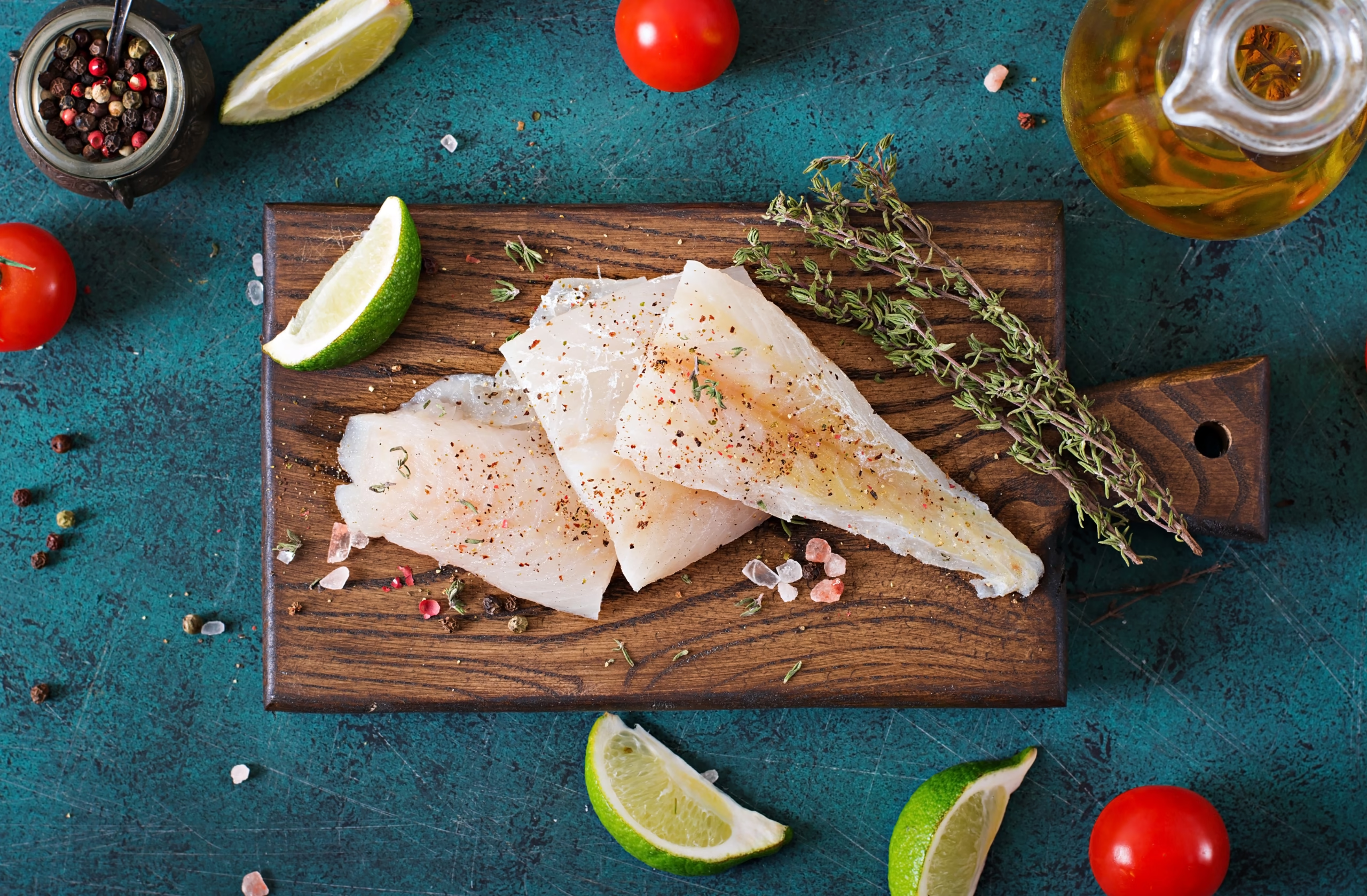
You can get by with one sharp knife, but a few cheap tools make the job cleaner. Here is the kit. As an Amazon Associate, we earn from qualifying purchases.
- A sharp fillet knife — a 7-9″ flexible blade is ideal for bass. Shop fillet knives.
- Electric fillet knife (optional) — if you clean a lot of fish, this halves the time. See electric fillet knives.
- Cut-resistant glove — wet fish are slippery; protect your holding hand. Shop fillet gloves.
- Non-slip cutting board — a board with a clamp holds the fish steady. See fillet boards.
- Knife sharpener — a dull knife is the #1 cause of slips and torn fillets. Shop sharpeners.
- Vacuum sealer — for freezer storage without freezer burn. See vacuum sealers.
As an Amazon Associate we earn from qualifying purchases.