How to Catch Spotted Seatrout: Florida Panhandle Tactics That Actually Work
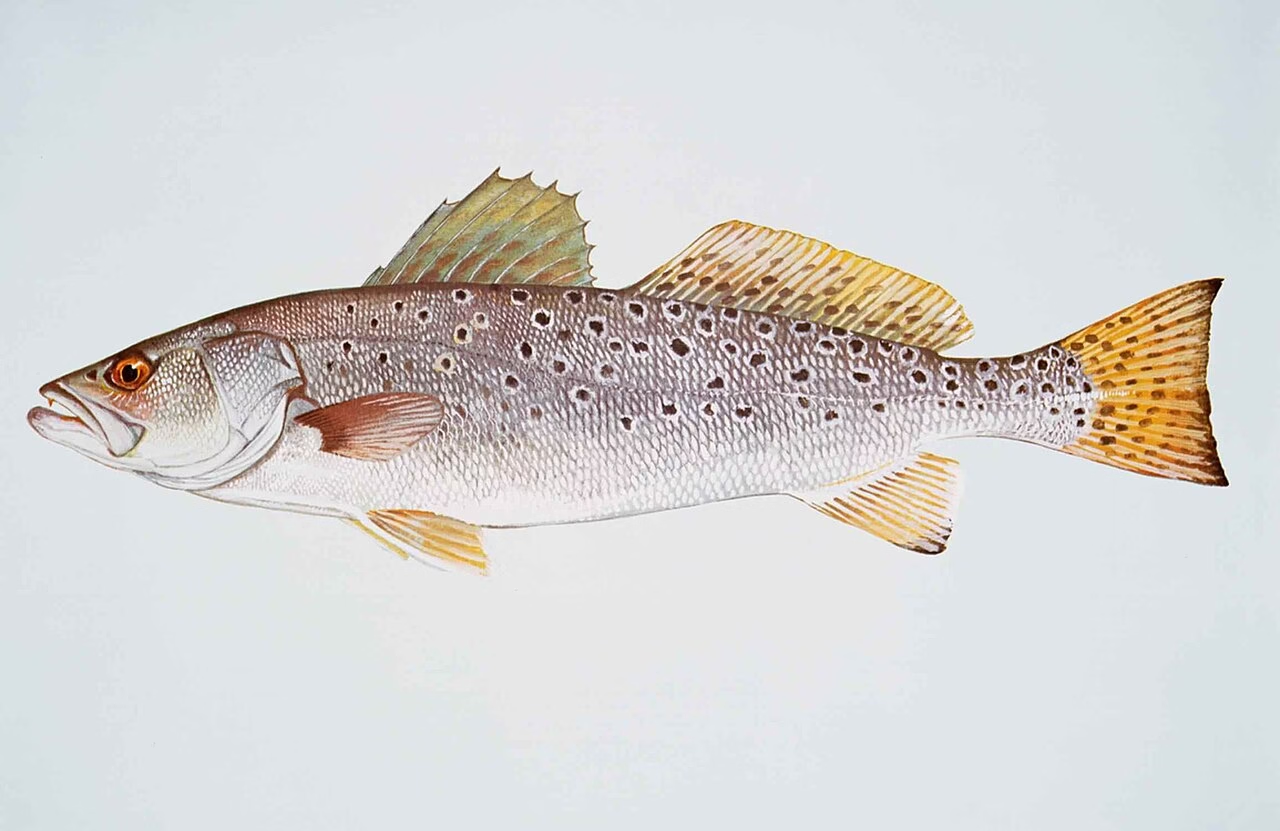
If there’s one fish that defined my childhood on the water, it’s the spotted seatrout. Speckled trout, as almost everyone on the Gulf Coast calls spotted seatrout, are the backbone of back-bay fishing around Apalachicola. They’re beautiful, they fight hard, and if you know what you’re doing, they’re not as hard to find as people think.
The spotted seatrout (Cynoscion nebulosus) deserves more respect than it gets. They’re a keystone species in our seagrass ecosystems, and understanding their biology makes you a dramatically better angler.
Where Spotted Seatrout Live
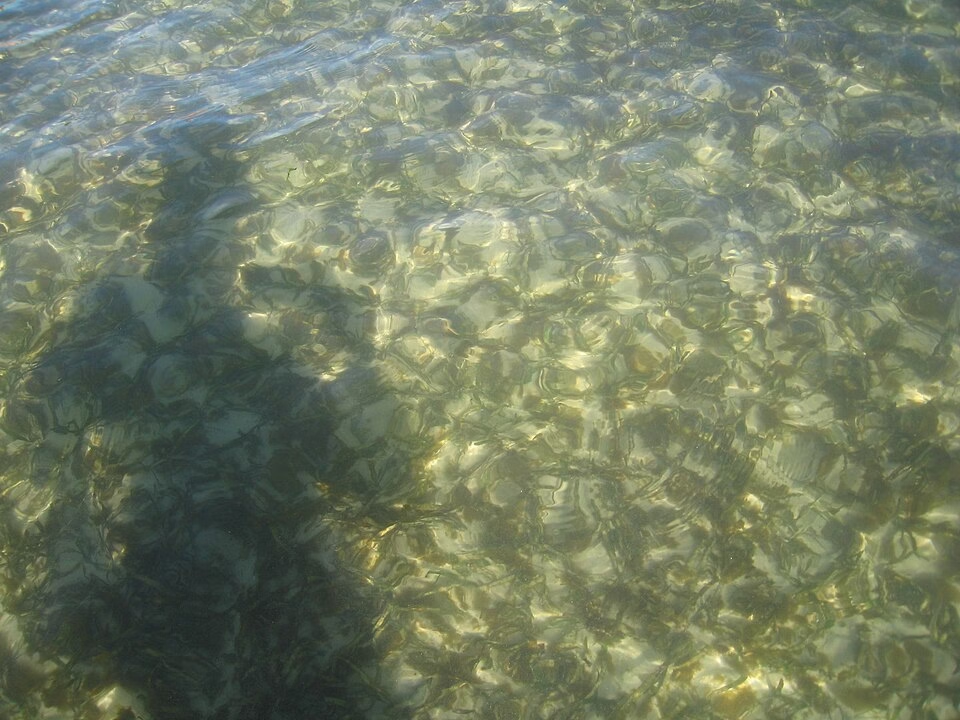
Spotted seatrout are an estuarine species, which means they spend most of their lives in the shallow, protected waters of bays, grass flats, and tidal creeks. Here in the Florida Panhandle, some of the most productive trout water in the state runs from St. George Sound west through Choctawhatchee Bay. The fish love seagrass beds—especially turtle grass and shoal grass—because that’s where they find their primary forage: shrimp, pinfish, and mullet.
During summer, look for trout in 2 to 6 feet of water over grass flats early in the morning and late in the evening. As the heat of the day sets in, they push deeper or move to shaded areas near oyster bars and mangrove edges. In winter, cold fronts push them into deeper holes and channels where the water temperature stays more stable. A good tactic in December and January is to find a deep channel adjacent to a grass flat and work it slowly.
Seasonal Patterns
Spring is prime time for big seatrout. As water temps climb into the mid-60s, trout begin their pre-spawn staging behavior. Large females—what we call “gator trout” when they push past 24 inches—congregate near deeper grass edges and are actively feeding. This is the time to throw soft plastics and slow down each cast.
Summer fishing is best done at first light or during the last hour before dark. Trout become nocturnal feeders in the heat, so night fishing around lighted docks and bridges can be incredibly productive. The sound of a trout blow-up on a topwater lure on a still summer night is something you never forget.
Fall offers some of the most consistent action of the year. Cooling water temperatures trigger aggressive feeding as trout prepare for winter. They follow schools of mullet and shrimp through the bays, and you can often spot them by watching the baitfish.
Best Tackle for Speckled Trout
A medium-light to medium spinning setup covers most trout fishing—a 7-foot rod with a 2500-series reel spooled with 10-pound braided line and a 20-pound fluorocarbon leader. Trout have relatively soft mouths and a stiffer rod telegraphs too much pressure on the hook set, which can tear the hook out. The light braid gives me excellent sensitivity for feeling subtle strikes over grass.
For artificial lures, I almost always start with a soft plastic on a 1/8 or 1/4 oz jig head. Root beer/chartreuse, shrimp-colored, and penny/chartreuse are proven color combos for Panhandle waters. Work the lure with a slow, twitching retrieve that keeps it just off the bottom or in the middle of the water column. Trout are ambush predators and will often follow a bait for several feet before committing.
Topwater lures like the MirrOlure She Dog or the Heddon Super Spook Jr. are absolutely deadly from late spring through fall, especially during low-light hours. The strike on a topwater is violent and addicting. Use a walk-the-dog retrieve with short pauses—those pauses are often when the bite happens.
Live and Dead Bait Options
Live shrimp is the classic trout bait and for good reason—it works. Float a live shrimp under a popping cork over a grass flat and you’re going to catch fish. The audible pop of the cork mimics the sounds of feeding fish and attracts trout from a surprising distance. Free-lining a live shrimp with just a small split shot near oyster bars is equally effective and often catches bigger fish.
Pigfish and small pinfish are excellent live baits for bigger trout. Hook them through the back just behind the dorsal fin and let them swim near the bottom of a grass edge. If there’s a gator trout in the area, she’ll find it.
Reading the Water
One of the most important skills in trout fishing is reading subtle water signs. Nervous water—the faint dimpling you see on a calm surface when baitfish are being pushed—often indicates feeding trout beneath. Birds working over a section of flat are a dead giveaway. And if you see mullet jumping and skipping erratically (as opposed to their normal lazy roll), something is chasing them.
Current is also your friend. Trout position themselves at current breaks—points of land, oyster bar edges, and channel mouths—waiting for prey to be swept to them. A falling tide that drains a grass flat can concentrate baitfish and trout at the mouth of tidal cuts in extraordinary numbers.
Regulations and Conservation
In Florida, spotted seatrout regulations vary by region, so always check MyFWC.com for current rules before you fish. In the Panhandle (northwest region), the slot limit is generally 15 to 20 inches, with one fish per person allowed over 20 inches. These regulations exist for good reason—mature females are the backbone of the population, and releasing those big breeding fish makes a real difference.
When practicing catch-and-release, wet your hands before handling the fish, keep it in the water as much as possible, and support the belly when holding it horizontally for a photo. Seatrout are more temperature-sensitive than many anglers realize—releasing them quickly, especially in summer when water temps are high, gives them the best chance of survival.
Final Thoughts
Spotted seatrout are the quintessential Florida inshore fish—and if you’re already fishing their habitat, snook are worth targeting on the same trips since both species share the same grass flats and mangrove edges. They’re accessible to beginners, endlessly challenging for experienced anglers, and absolutely magnificent creatures. Releasing a trout back into the dark water of a Gulf Coast back bay is a good reminder of why these fisheries are worth protecting. Some things never get old.
Spotted Seatrout: Quick Reference
| Category | Details |
|---|---|
| Scientific Name | Cynoscion nebulosus |
| Florida Size Limit | 15–20 inch slot (Gulf coast); must release over 20" |
| Bag Limit | 3 per person/day (Gulf coast) |
| Best Season | Fall (Oct–Dec) & Spring (Mar–May) |
| Primary Habitat | Seagrass flats, oyster bars, nearshore Gulf |
| Top Baits | Live shrimp, DOA Shrimp, MirrOlure MirrOdine, topwaters at dawn |
| Recommended Tackle | Medium spinning, 10–15 lb braid, 20 lb fluoro leader |
| Best Tide | Incoming tide onto grass flats; outgoing at oyster bar edges |
| Water Temperature | 65–85°F optimal; slow below 55°F |
Seatrout Seasonal Activity Chart
| Season | Location | Technique | Activity Level |
|---|---|---|---|
| Jan–Feb (Winter) | Deep channels, creek mouths | Slow-rolling jig or live shrimp near bottom | ⭐⭐ |
| Mar–May (Spring) | Shallow grass flats, oyster bars | Topwaters, soft plastics, live shrimp | ⭐⭐⭐⭐ |
| Jun–Aug (Summer) | Deeper grass edges, passes | Early morning topwaters, jigs on edges | ⭐⭐⭐ |
| Sep–Dec (Fall) | Grass flats, nearshore reef edges | Topwaters, MirrOlures, live shrimp | ⭐⭐⭐⭐⭐ |
Spotted Seatrout: Quick Reference
| Category | Details |
|---|---|
| Scientific Name | Cynoscion nebulosus |
| Florida Slot Limit | 15–20 inches (Gulf); fish over 20″ must be released |
| Bag Limit | 3 per person/day (Gulf coast) |
| Peak Season | Fall (Oct–Dec) and Spring (Mar–May) |
| Primary Habitat | Seagrass flats, oyster bars, nearshore Gulf waters |
| Top Lures & Baits | DOA Shrimp, MirrOlure MirrOdine, topwaters, live shrimp under a popping cork |
| Best Tackle | Medium spinning, 10–15 lb braid, 20 lb fluorocarbon leader, 1/4 oz jig heads |
| Optimal Water Temp | 68–82°F; activity slows significantly below 55°F |
| Best Tide Phase | Incoming onto grass flats; outgoing at oyster bar drop-offs |
Seatrout Seasonal Patterns at a Glance
| Season | Location | Best Technique | Activity |
|---|---|---|---|
| Winter (Jan–Feb) | Deep channel edges, creek mouths | Slow-roll jig or live shrimp near bottom | Low ⭐⭐ |
| Spring (Mar–May) | Shallow flats, oyster bars | Topwaters at dawn, soft plastics, live shrimp | High ⭐⭐⭐⭐ |
| Summer (Jun–Aug) | Deeper grass edges, passes | Early morning topwaters, jigs on outer flat edges | Moderate ⭐⭐⭐ |
| Fall (Sep–Dec) | Grass flats, nearshore structure | Topwaters, MirrOlures, live shrimp | Peak ⭐⭐⭐⭐⭐ |
Gear We Recommend
Here is the gear that makes this easier, ready to shop. As an Amazon Associate, we earn from qualifying purchases.
- 7ft inshore rod — See inshore rods
- 3000 spinning reel — Shop reels
- Braided line — Compare braid
- Fluorocarbon leader — See leader
- Popping cork — Shop popping corks
- Soft plastic jerkbaits — Browse lures
- Fishing pliers — See pliers