Crappie Fishing: How to Find and Catch Slabs in North Florida Lakes
I came to crappie fishing later than most. Growing up in the Panhandle, saltwater was always the focus—trout, reds, flounder. On a good February morning, a lake like Talquin can give up dozens of crappie before noon, which explains what all the fuss is about. These little fish have serious fans for serious reasons.
Crappie—black crappie (Pomoxis nigromaculatus) and white crappie (Pomoxis annularis)—are among the most popular freshwater gamefish in North America, and North Florida offers outstanding crappie fishing in its numerous reservoirs, natural lakes, and river systems. They’re accessible, cooperative during peak season, and exceptional table fish. Everything about them invites you to go fishing more often.
Black Crappie vs. White Crappie
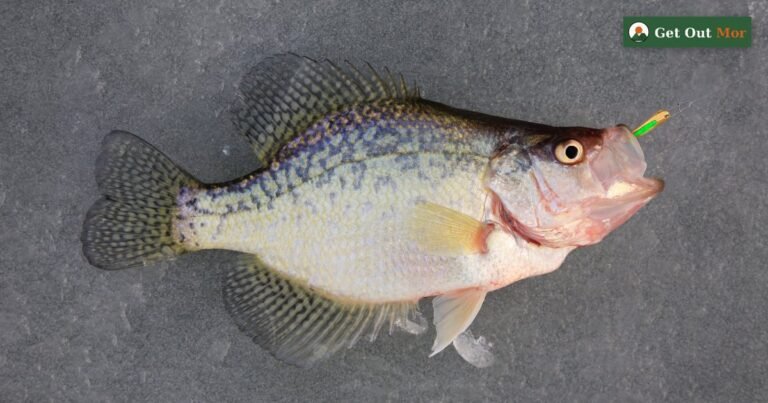
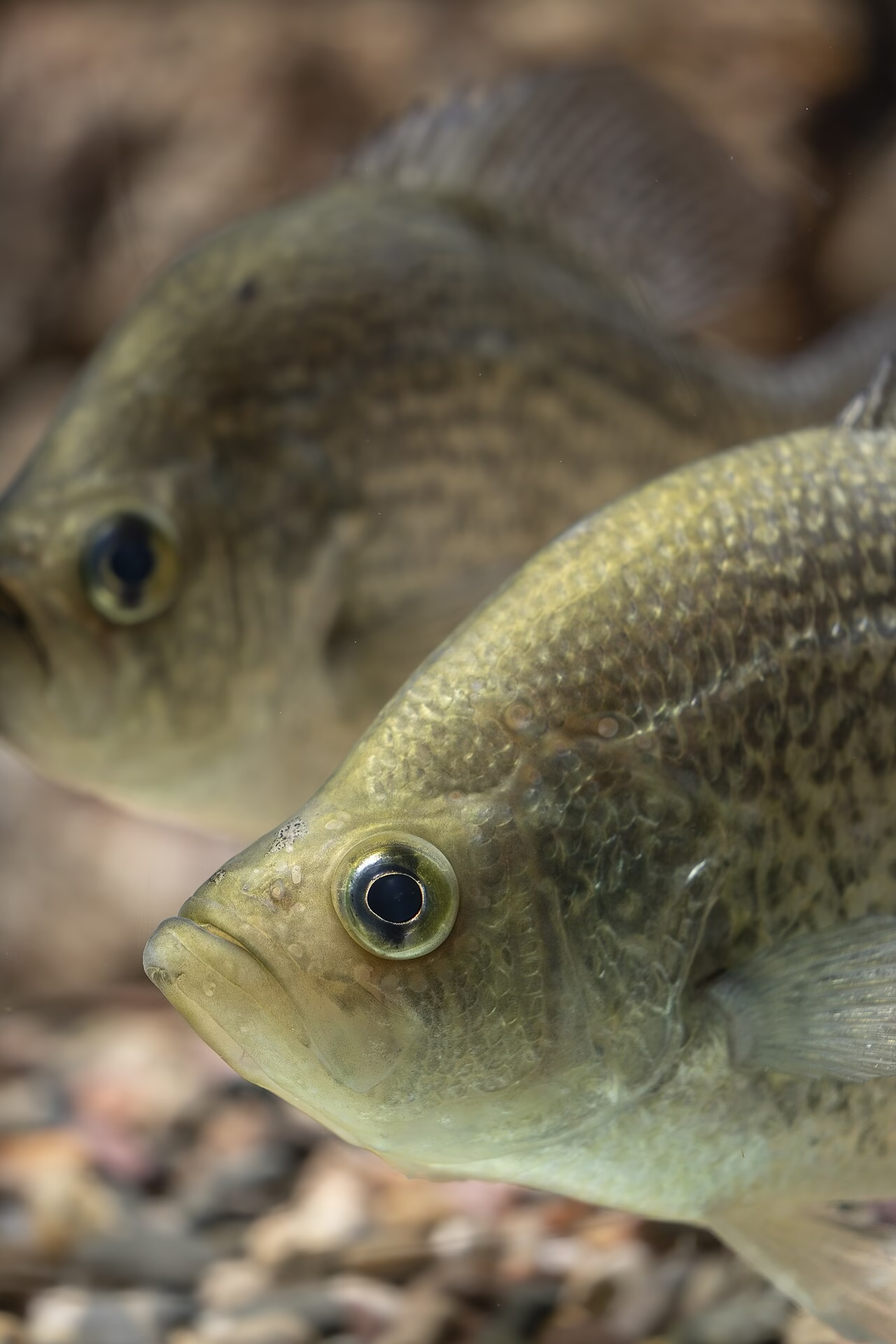
Both species are common in North Florida waters, and they often share the same lakes. Black crappie (Pomoxis nigromaculatus) prefer clearer water with vegetation and tend to be more speckled and darker in coloration. White crappie are more tolerant of turbid water and have a more distinctly barred pattern. From a fishing standpoint, their behavior is similar enough that the same techniques work for both.
Biologically, crappie are members of the sunfish family (Centrarchidae), making them relatives of largemouth bass and bluegill. They’re schooling fish with a tendency to stack in specific areas—find one and you’ve often found dozens. This schooling behavior is one of the things that makes crappie fishing so addicting.
Best Crappie Lakes in North Florida
North Florida has exceptional crappie fisheries that don’t get nearly the attention they deserve. Many of these same lakes hold strong populations of channel catfish—worth targeting on the same trip with a second rod on the bottom. My top recommendations include:
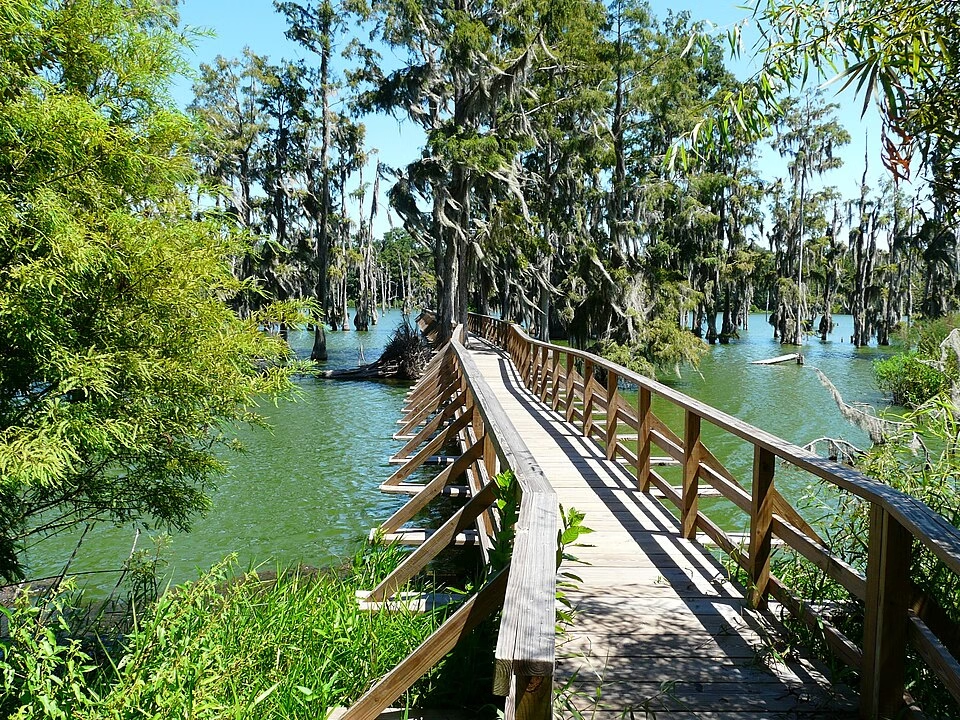
Lake Talquin (Jackson County): This 8,000-acre reservoir on the Ochlockonee River is one of Florida’s finest crappie lakes. The standing timber throughout the lake provides ideal crappie habitat, and the fish here regularly run 12 to 14 inches. Winter fishing from January through March is particularly outstanding.
Lake Seminole (Jackson County): Straddling the Florida-Georgia border, Lake Seminole produces exceptional slab crappie in the river channels and around submerged timber. The Flint and Chattahoochee river arms hold fish throughout the year.
Lake Ocheesee (Jackson County): A smaller, shallower lake that’s often overlooked but consistently produces quality crappie around its extensive vegetation beds.
Suwannee River system: The river and its associated oxbows and backwaters hold good crappie populations accessible by small boat or canoe.
Seasonal Patterns
Crappie are most aggressive and easiest to locate during two windows. Like bass, their bite is governed heavily by water temperature—the same thermal triggers that control the bass feeding cycle apply to crappie. The pre-spawn period (late January through March in North Florida) and fall (October and November).
The pre-spawn period is when crappie move from deep-water wintering areas toward shallow structure in preparation for spawning. Fish that were in 15 to 20 feet of water in December move to the 4 to 8-foot range near stumps, timber, dock pilings, and vegetation edges. Feeding activity is intense as they build reserves for the spawn.
During the actual spawn (March in most North Florida lakes), crappie move very shallow—often 2 to 4 feet—over sandy or gravel bottoms near structure. Males fan nests and guard them aggressively; females mill nearby. This is when crappie become easiest to catch and most vulnerable, so consider releasing fish carefully during this period.
Summer can be challenging—fish go deep to find cooler, more oxygenated water. But nighttime fishing under dock lights in summer can produce excellent crappie action when fish rise to feed on insects and baitfish attracted to the light.
Finding Crappie: Reading the Lake
Crappie are structure-oriented but more specifically they’re cover fish. Submerged brush piles, standing timber, dock pilings, fallen trees, bridge supports, and vegetation edges are all potential honey holes. In a lake with extensive timber like Talquin, this seems overwhelming—but crappie choose specific depth ranges at specific times of year, which narrows the search considerably.
A quality fish finder dramatically improves your crappie odds. Look for fish suspended 2 to 4 feet above the bottom structure or holding at specific depth contours. When you mark fish at a certain depth along one piece of structure, check other pieces at that same depth—you’ll often find a consistent pattern that produces throughout the lake.
Crappie Tackle and Techniques
Light tackle is the rule for crappie. A 5.5 to 7-foot ultralight spinning rod with a 1000-series reel, 6-pound monofilament or 10-pound braid with a 6-pound fluorocarbon leader is my standard setup. Crappie have relatively soft mouths, so the light, flexible rod helps avoid tearing the hook out during the fight.
Jigging: A 1/32 to 1/8 oz jig head tipped with a 2-inch curly tail grub is the most versatile crappie lure ever made. Chartreuse, white, pink, and pink/chartreuse combinations are perennial producers. Drop the jig to the level of the fish and work it with subtle lifts and drops. Crappie often take on the fall, so watch your line for any twitch.
Spider rigging: Multiple rods extended from rod holders on the bow of the boat, each rigged with a crappie jig or minnow, trolled slowly through productive areas. This method covers water efficiently and allows precise depth control. It’s incredibly effective and extremely popular on Talquin and Seminole.
Live minnows: A small fathead or threadfin shad minnow under a slip float set at the right depth is a classic crappie technique that never stops working. Let the float drift naturally along timber edges and structure. Crappie rarely miss a properly presented live minnow.
Table Quality
Crappie are widely considered the finest-tasting freshwater fish in North America, and it’s a well-earned reputation. The white, delicate, flaky fillets fry up beautifully and have a clean, mild flavor without any of the muddiness associated with some other freshwater species. A crappie fry with hush puppies and coleslaw is a legitimate cultural event in North Florida. You’ll never regret keeping a legal limit of crappie for the table.
Crappie: Quick Reference
| Category | Details |
|---|---|
| Species | Black Crappie (Pomoxis nigromaculatus) and White Crappie (Pomoxis annularis) |
| Florida Size Limit | No statewide minimum; check local lake regulations |
| Bag Limit | 25 per person/day (statewide; some lakes differ) |
| Peak Season | Pre-spawn (Jan–Mar in North FL) and Fall (Oct–Nov) |
| Primary Habitat | Submerged timber, dock pilings, brush piles, vegetation edges |
| Top Lures | 1/32–1/8 oz jig + 2″ curly tail grub; chartreuse, white, pink |
| Top Live Bait | Small fathead or threadfin shad minnow under a slip float |
| Best Technique | Spider rigging (multiple rods slow-trolled) or vertical jigging around structure |
| Best North FL Lakes | Lake Talquin, Lake Seminole, Lake Ocheesee |
Crappie Seasonal Depth Guide
Crappie move predictably with the seasons. Knowing what depth to target is the single biggest factor in locating fish.
Top North Florida Crappie Lakes Comparison
| Lake | County | Size | Best Feature | Peak Timing |
|---|---|---|---|---|
| Lake Talquin | Jackson / Gadsden | ~8,000 acres | Extensive standing timber throughout the lake | Jan–Mar |
| Lake Seminole | Jackson (FL/GA border) | ~37,000 acres | River arms (Flint & Chattahoochee); large slab crappie | Feb–Apr |
| Lake Ocheesee | Jackson | ~2,000 acres | Shallow, heavily vegetated; less pressure than Talquin | Jan–Mar |