Hunters Beware. The Growing Threat of CWD in the Southeast
What the spread of chronic wasting disease means for Southeastern deer hunters — and how to protect yourself and the herd.
👤 Who This Is For
Deer hunters in the Southeast — particularly Alabama, Mississippi, Tennessee, and surrounding states — who want to understand CWD, how to protect themselves, and what gear and practices to adopt before and during the season.
⚡ Bottom Line
CWD is spreading in the Southeast — confirmed cases now exist in Alabama, Mississippi, and Tennessee with the range expanding every season.
Get your deer tested — most state wildlife agencies offer free or low-cost CWD testing. Don’t consume meat from untested deer in known CWD zones.
Use proper field dressing gear — gloves, bone-out processing, and avoiding brain and spinal tissue are your primary protection.
Chronic Wasting Disease is no longer a Midwest problem. It’s here in the Southeast, it’s spreading, and every deer hunter in the region needs to understand what it is, how it spreads, and what to do about it before they pull the trigger this season.
This isn’t meant to scare you out of the deer stand. It’s meant to make sure you’re hunting smart, protecting yourself, and doing your part to slow the spread of a disease that — once it gets established in a population — is nearly impossible to stop.

What Is Chronic Wasting Disease?
Chronic Wasting Disease is a fatal neurological disease that affects cervids — deer, elk, and moose. It is caused by prions, which are abnormally folded proteins that trigger a chain reaction destroying brain and nervous system tissue. There is no treatment and no recovery. Every infected animal eventually dies from it.
Affected Animals
White-tailed deer, mule deer, elk, and moose. Whitetails are the primary concern in the Southeast.
Cause
Prions — misfolded proteins that cannot be destroyed by cooking, freezing, or standard disinfectants.
How It Spreads
Direct contact between animals, contaminated soil, water, and feed. Feeding troughs are a major vector.
Incubation
Symptoms may not appear for 18–24 months after infection. Deer can spread CWD before showing signs.
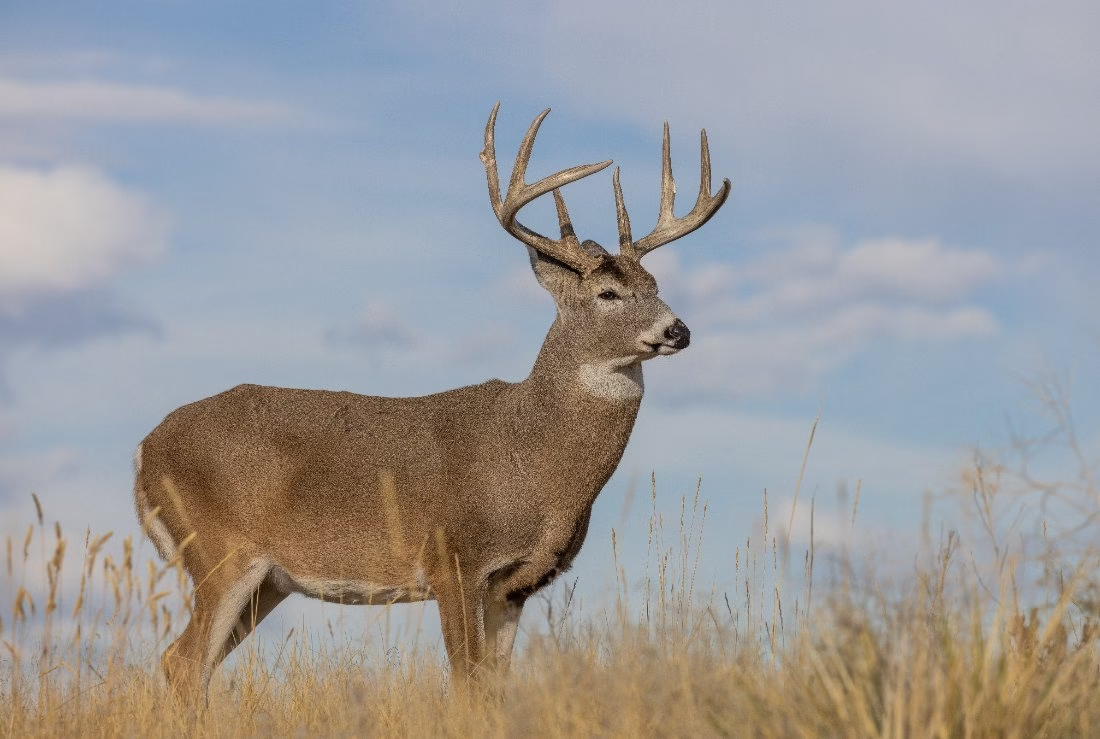
Symptoms to Watch For

Image credit: USGS — usgs.gov/media/images/deer-chronic-wasting-disease
An infected deer will not always look visibly sick, especially early in the disease. However as CWD progresses, look for these warning signs in the field:
| Symptom | What You Might See | Stage |
|---|---|---|
| Weight loss | Dramatically thin deer despite available food | Early–Mid |
| Behavioral changes | Lack of fear of humans, wandering aimlessly | Mid |
| Excessive drooling | Drooling or difficulty swallowing | Mid–Late |
| Lack of coordination | Stumbling, staggering, head drooping | Late |
| Isolation | Separating from the herd, standing alone | Mid–Late |
CWD in the Southeast: Where It Stands Now
CWD was historically a disease of the Midwest and Rocky Mountain states. That has changed. Confirmed cases have been documented across the Southeast, and wildlife biologists are tracking an expansion of the disease’s range every season. Key states to watch:
Alabama
- Confirmed CWD positive cases detected
- ADCNR actively expanding testing
- Carcass transportation restrictions in place
- Check ADCNR website for current zone maps
Mississippi
- Multiple confirmed counties
- MDWFP testing program available to hunters
- Feeding and baiting restrictions active in CWD zones
- Deer carcass transport heavily regulated
Tennessee
- Confirmed positive in multiple counties
- TWRA offers free CWD testing at check stations
- Mandatory testing in some zones
- Urine-based attractants banned statewide
What Hunters Should Do: A Practical Pre-Season Checklist
Knowing CWD exists is only useful if you change your behavior in response. Here’s exactly what to do before, during, and after the season.
✅ Do This
- Check your state’s current CWD zone map
- Remove all feed and bait stations
- Stock up on field dressing gloves
- Learn your state’s carcass transport rules
- Locate your nearest CWD testing station
❌ Stop Doing This
- Using communal feed troughs
- Transporting whole carcasses across state lines
- Using urine-based attractants in restricted zones
- Discarding carcass parts carelessly in the field
Field Dressing Safely in CWD Country
The highest risk of human exposure during field dressing comes from contact with brain and spinal tissue. Follow these practices on every deer harvested in or near a CWD zone:
Wear Gloves
Wear nitrile gloves for the entire field dressing process. Double-glove if possible.
Bone Out the Meat
Remove meat from the bone rather than transporting whole carcass. Avoid cutting through the spine.
Avoid High-Risk Parts
Do not consume brain, spinal cord, eyes, spleen, or lymph nodes from any deer in a CWD zone.
Get Tested
Submit samples to your state agency before consuming meat from a deer harvested in a CWD zone.
Recommended Field Dressing Gear for CWD Country
The right gear makes safe field dressing easier and faster. These are the items worth having in your pack every time you hunt in or near a CWD zone.
| Item | Why You Need It | Where to Get It |
|---|---|---|
| Nitrile gloves (box of 100) | Primary barrier between you and deer tissue | Amazon → |
| Field dressing kit with saw | Clean bone-out processing reduces spinal contact | Amazon → |
| Game bags | Keep boneless meat clean and away from soil | Amazon → |
| Disposable apron | Keeps fluid off your clothing during processing | Amazon → |
| Zip-lock sample bags | Required for submitting lymph node samples for CWD testing | Amazon → |
Is It Safe to Eat Deer from CWD Zones?
This is the question every hunter asks. The honest answer is: there is currently no documented case of CWD transmitting to humans. However, the CDC and most state wildlife agencies recommend not consuming meat from CWD-positive deer as a precautionary measure. The practical advice is consistent — test your deer before consuming it if you hunt in a CWD zone, and do not eat any part of a deer that tests positive.
Testing Your Deer: Pros and Cons
✅ Reasons to Test
- Peace of mind before consuming meat
- Usually free through state programs
- Results in 2–4 weeks in most states
- Contributes to statewide surveillance data
- Helps wildlife agencies track the spread
❌ Drawbacks
- Results take weeks — meat must be stored
- Requires proper lymph node sampling technique
- Not all counties have convenient drop-off sites
- A positive result means discarding the meat
📋 Key Takeaways
- CWD is in the Southeast now — Alabama, Mississippi, and Tennessee all have confirmed cases.
- Infected deer don’t always look sick — testing is the only way to know for certain.
- Feeding troughs spread CWD — remove them from your property and hunting areas.
- Wear gloves and bone out your deer — this is your primary protection during field dressing.
- Get your deer tested — most state agencies offer free testing. Use it.
- Check regulations every season — CWD zones, transport rules, and baiting restrictions change annually.
📚 Related Articles
Stay Informed. Hunt Smart.
Browse all our deer hunting guides for gear recommendations, tactics, and season prep.
Browse Deer Hunting Guides →