Does Weather Really Move Deer? What the Research Says
Cold fronts, barometric pressure, moon phase — every hunter has a theory. Here’s what the actual research shows about when whitetails move.
Ask ten deer hunters what moves deer and you’ll get ten answers. The good news: wildlife researchers have actually studied this, collaring deer and logging movement against weather and moon data. The picture that emerges is more useful — and more honest — than the folklore. Here’s what holds up.
The barometric pressure question
This is the one hunters swear by, and there’s real signal here.
In practice, that’s why the hours right before and after a front can be so good: the pressure is in motion, and deer get on their feet.
What a big study actually found
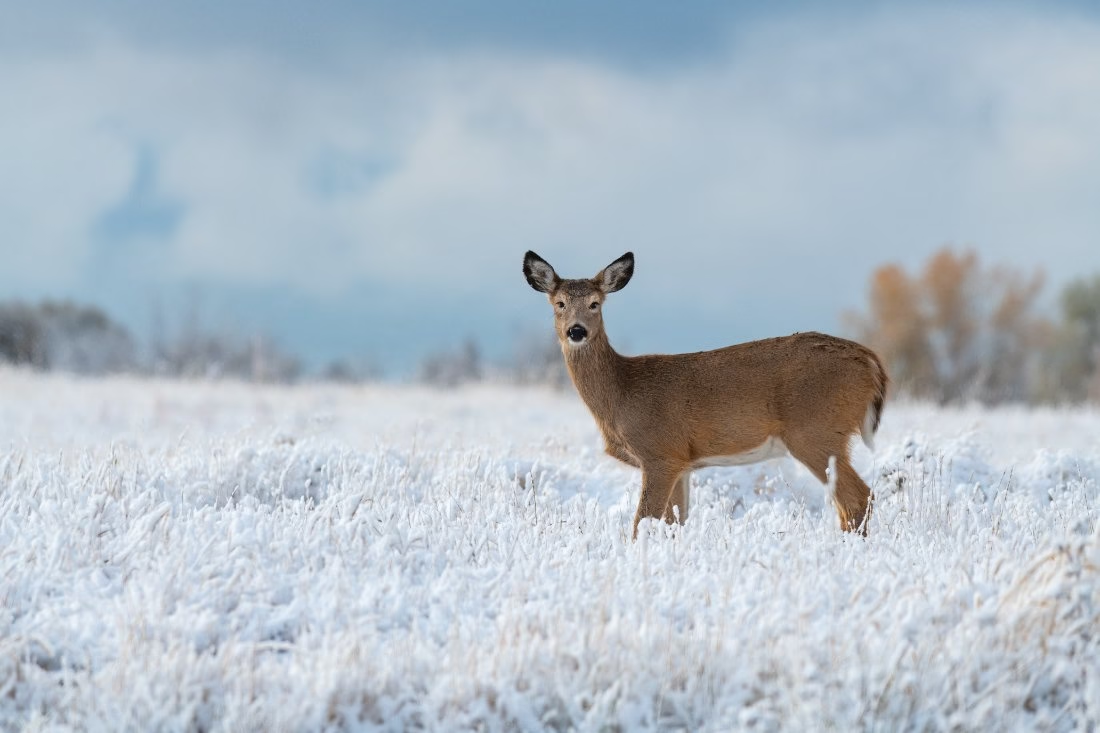
In one of the larger field efforts, researchers logged temperature, wind, lunar phase, moon position, cloud cover, precipitation, humidity, and pressure against deer movement. The standout finding: barometric pressure influenced movement more than any other single factor they measured. Weather matters — but it’s mostly about pressure and the temperature swings that come with fronts, not the calendar.
Moon phase: myth vs. data
Moon phase is where folklore outruns the science. Scientists are clear that breeding timing has nothing to do with the moon (more on that below). For movement, the effect is small and inconsistent — with one interesting exception.
The rut runs on daylight, not weather
Here’s the myth-buster that surprises people: the timing of the rut is locked to photoperiod (day length), not weather or moon.
So a warm early November doesn’t “delay the rut” — it just keeps more of the action after dark. The breeding is happening on schedule.
How to actually use weather
Put it together and the playbook is simple: hunt the pressure change around fronts, prioritize the cold, clear, high-pressure days right after a front passes, and don’t skip a hunt over moon phase. And remember that the calendar rut (mid-November in most of the country) will fire regardless of the forecast — so be in the woods then no matter what. For where to set up, see our whitetail gear and season checklist.
Sources
Sources: Deer & Deer Hunting (Charles Alsheimer), MeatEater Wired to Hunt, Outdoor Life, Mossy Oak, and NC State / Penn State deer-movement research.
FAQ
The research says yes — peak feeding clusters around 29.80–30.29 inHg, and deer move more when pressure is changing than when it’s steady. That’s why the windows around fronts hunt so well.
No. Breeding is triggered by day length (photoperiod), not the moon. Peak breeding lands on nearly the same dates every year regardless of moon phase or weather.
Yes. Moon phase has only a small, inconsistent effect on movement. Don’t skip a hunt over it — especially during the rut, when deer move on their own schedule.
The quick version
- Barometric pressure is the weather factor with the strongest research support.
- Deer move most when pressure is changing — hunt the windows around fronts.
- The rut is set by day length: mid-November peak, every year, rain or shine.
- Don’t skip hunts over moon phase — the effect is small and inconsistent.