Free Camping on Public Land: A Beginner’s Guide to Dispersed Camping
Millions of acres of public land are open to camping for free — no campground, no reservation, no fee. Here’s how to do it right.
This guide links to gear we recommend. As an Amazon Associate we earn from qualifying purchases at no cost to you. Disclosure.
Crowded, pricey campgrounds aren’t your only option. On most BLM and National Forest land you can camp for free, away from developed sites — it’s called dispersed camping (also boondocking or wild camping). The trade-off is simple: no amenities, more responsibility. Get the rules right and it’s the best camping there is. Here’s the beginner’s playbook.
What dispersed camping is
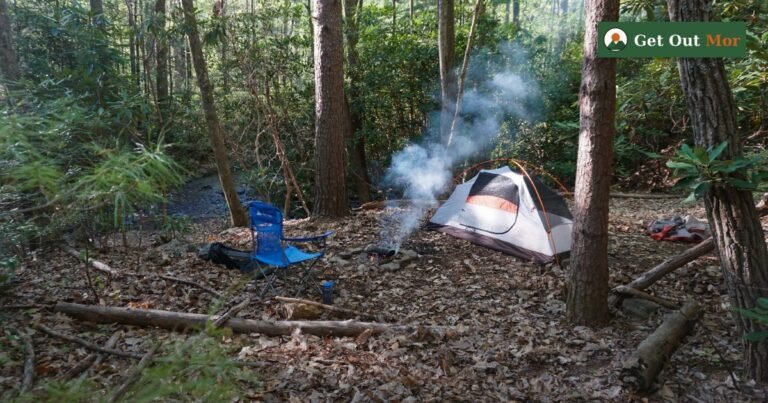
Dispersed camping means camping on public land outside developed campgrounds. There are no bathrooms, no water spigots, no picnic tables, and no trash cans — you’re fully self-sufficient. In exchange, you get solitude, space, and zero cost.
Where you can do it
The two big landlords are the Bureau of Land Management (BLM) and the U.S. Forest Service (USFS). Most BLM land allows dispersed camping unless it’s posted closed, and the USFS allows it in most National Forests — though rules vary by district. When in doubt, call the local field office or ranger district before you go.
The rules (memorize these)
These rules protect the land and keep dispersed camping legal. Always obey posted signs, which override the general rules.
How to find a site
The best sites are existing pull-offs along legal Forest Service or BLM roads, within a few hundred feet of the road. Apps make finding them easy: onX Offroad, The Dyrt, iOverlander, and FreeRoam show public-land boundaries and crowd-sourced sites. Cross-check boundaries so you’re actually on public land — not a private inholding.
What to bring (there’s nothing out there)
Because there are no amenities, you carry everything: plenty of water (or a filter), a way to cook (see our camp stove guide), a shelter rated for the conditions (tents and cold-weather sleeping bags), a way to handle human waste (trowel, pack-out bags), and trash bags to carry everything out. A full tank of gas and an offline map matter too — cell service is rarely a guarantee.
Leave No Trace
Dispersed camping survives only because campers respect it. Pack out everything you bring in — trash, food scraps, and toilet paper. Camp on durable surfaces, keep fires small and legal (check fire restrictions first), and leave your site cleaner than you found it. The whole privilege depends on it.
Sources
Sources: Bureau of Land Management (blm.gov), U.S. Forest Service, onX Offroad, The Dyrt, and Leave No Trace Center guidelines.
FAQ
Yes — camping on most BLM and National Forest land outside developed campgrounds is free, with no reservation or permit needed in most areas. Always check for local restrictions.
Generally up to 14 days within any 28-day period, after which you must move on (often 25–30 miles away). Specific limits vary by field office, so verify locally.
Use apps like onX Offroad, The Dyrt, iOverlander, and FreeRoam to find public-land boundaries and existing sites, then camp in an established spot within ~150 feet of a legal road.
The quick version
- Most BLM and National Forest land allows free dispersed camping.
- Core rules: 14 days/28, camp 100 ft from water and within ~150 ft of the road, use existing sites.
- You carry everything in and pack everything out — no amenities.
- Apps like onX and The Dyrt make finding legal sites easy.
Pack for the trip: best tents, best sleeping bags, best camping stoves, and best headlamps.
Gear We Recommend
Here is the gear that makes this easier, ready to shop. As an Amazon Associate, we earn from qualifying purchases.
- Tent — See tents
- Sleeping bag — Shop sleeping bags
- Camp stove — See stoves
- Cooler — Browse coolers
- Headlamp — See headlamps