How to Avoid Hypothermia (Even in Mild Weather)
Hypothermia is the danger that catches prepared-looking hikers off guard — and it doesn’t need freezing temperatures to do it.
This guide links to gear we recommend. As an Amazon Associate we earn from qualifying purchases at no cost to you. Disclosure.
Most people picture hypothermia as a deep-winter problem. It isn’t. It’s one of the most common serious risks for hikers and campers, and it strikes most often in cool, wet, mild weather — exactly when people let their guard down. The good news: it’s almost entirely preventable once you understand how it works. Here’s how to stay safe.
Why hypothermia is the hidden danger
Hypothermia is when your body loses heat faster than it can produce it, dropping your core temperature. It’s consistently cited by search-and-rescue teams as a top risk for lost or injured hikers — and it sneaks up because the early stages don’t feel like an emergency. By the time someone is badly impaired, they often can’t help themselves.
It’s not just deep cold
The cotton mistake
The single most common error is wearing cotton. Cotton soaks up water and holds it against your skin, destroying its insulating value — hence the saying “cotton kills.”
Layering that actually works
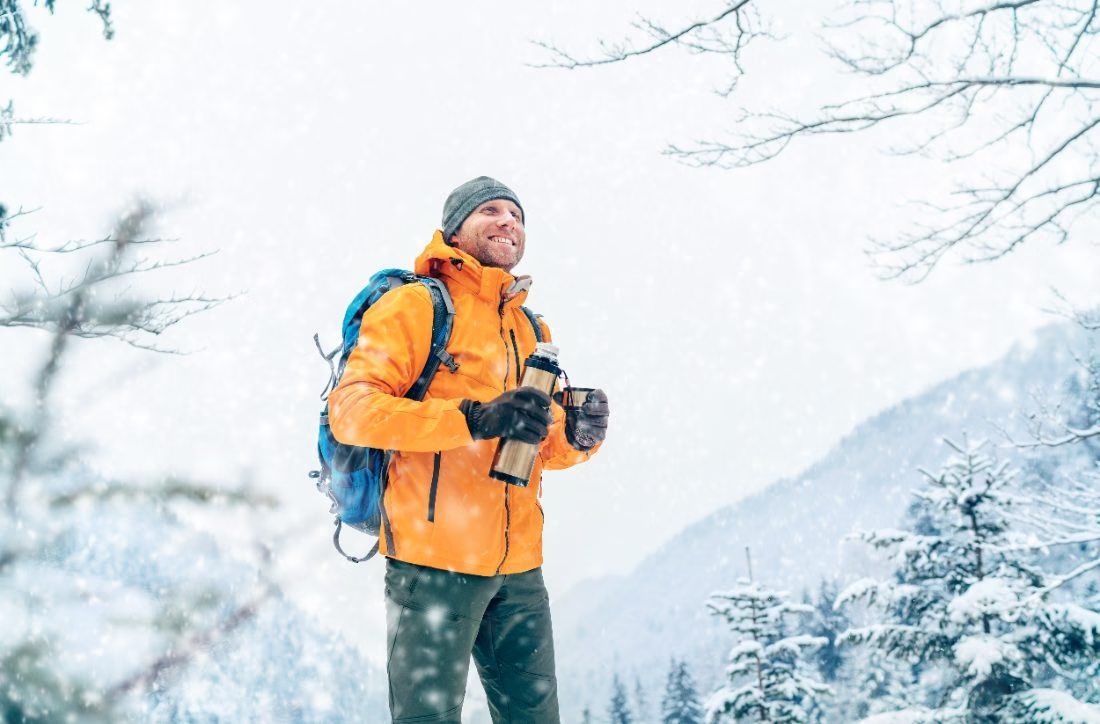
Use three layers you can adjust: a moisture-wicking base (wool/synthetic), an insulating mid-layer (fleece or puffy), and a waterproof-breathable shell. Add or shed layers before you’re soaked in sweat or chilled — managing moisture is the whole game. Pack a dry spare base layer in a waterproof bag, plus a hat and gloves even in mild forecasts.
Spot the warning signs early
Learn the “-umbles”: mumbles (slurred speech), fumbles (clumsy hands), stumbles (poor coordination), and grumbles (irritability, confusion). Uncontrolled shivering is the body’s early alarm. If shivering stops while someone is still cold and impaired, that’s a danger sign — treat it seriously.
What to do
At the first signs: stop, get the person out of wind and rain, swap any wet clothing for dry, add insulation (including from the ground up), and give warm, sweet fluids if they’re alert. Build or move to shelter. For severe cases — no shivering, confusion, collapse — treat it as an emergency and get help. Prevention beats treatment every time.
Plan before you go
Leave a trip plan — where you’re going, when you’ll be back, and who’s with you — with someone not on the trip. Pack extra food, a dry layer, a headlamp, and an emergency bivy or space blanket even on day hikes. Most hypothermia cases trace back to an unplanned delay — a wrong turn, an injury, a longer day than expected — so carry for the trip you might have, not just the one you planned.
Sources
Sources: U.S. National Park Service (Hike Smart), Washington Trails Association, Seattle Mountain Rescue, and Appalachian Trail Conservancy safety guidance.
FAQ
Yes. Wet and windy conditions can cause hypothermia at temperatures around 50°F. Cool, rainy days are among the most dangerous because people underdress for them.
Cotton absorbs and holds water against your skin, losing its insulating value and pulling heat from your body. Wool and synthetic fabrics keep insulating when wet — choose those instead.
Uncontrolled shivering plus the “-umbles”: slurred speech, clumsy hands, stumbling, and confusion or irritability. Act at the first signs — get dry, add insulation, and get out of the wind.
The quick version
- Hypothermia strikes most in cool, wet, windy weather — even near 50°F.
- Ditch cotton; wear wool or synthetic layers that insulate when wet.
- Watch for the “-umbles” and shivering — act early.
- Carry a dry layer and emergency shelter, and always leave a trip plan.
Heading out on a day hike too? See our guide to the best hiking boots for day hikes for fit tips and top picks.