Best Trail Cameras for Deer Hunting (2026): Cellular vs. Non-Cellular
The best trail cameras for scouting whitetails in 2026 — broken down by the choice that actually matters: cellular vs. non-cellular.
Get Out Mor is reader-supported. When you buy through links on this page we may earn a small commission at no extra cost to you. As an Amazon Associate I earn from qualifying purchases. See our full disclosure.
If you are scouting deer before the season, the first decision is not the brand — it is cellular vs. non-cellular. Cellular cameras text photos to your phone so you never disturb the spot; non-cellular cameras store to an SD card you walk in and pull. This guide is for whitetail hunters, and we split our picks by that one choice so you buy the right tool for how you hunt.
Get cellular if you hunt private or leased ground and want zero intrusion. Get non-cellular if you are on a budget, hunt pressured public land where you check cams rarely, or do not want a monthly plan (~$10/camera/month).
On heavily pressured deer, the camera’s flash matters more than the brand. A faint red glow from low-glow IR has been shown to alter mature-buck movement. Run no-glow cameras within bow range of a target buck — every pick below that we flag “no-glow” is safe for wary deer.
- Best cellular overallTactacam Reveal Ultra
- Best budget cellularSPYPOINT Flex
- Best non-cellularGardePro E5S
- Best for wary bucksBrowning Recon Force Elite HP5
- Cheapest that worksWOSPORTS Mini Trail Camera
Hunting where your cameras say to? A mobile setup gets you there — the best climbing sticks and tree saddles of 2026.
How we picked
1. Cross-referenced the experts. We compared picks across independent testers and kept the gear that shows up again and again for this exact use.
2. Checked what real people run. We read through Reddit and forum threads to confirm these hold up in the field — and that we are matching the right gear to the right person.
Sources cross-referenced: Outdoor Life, Field & Stream, Petersen’s Hunting, plus r/bowhunting & r/Hunting threads. Picks reflect what whitetail hunters actually run — weighted toward fast trigger speed and no-glow flash, the two features that matter most for deer.
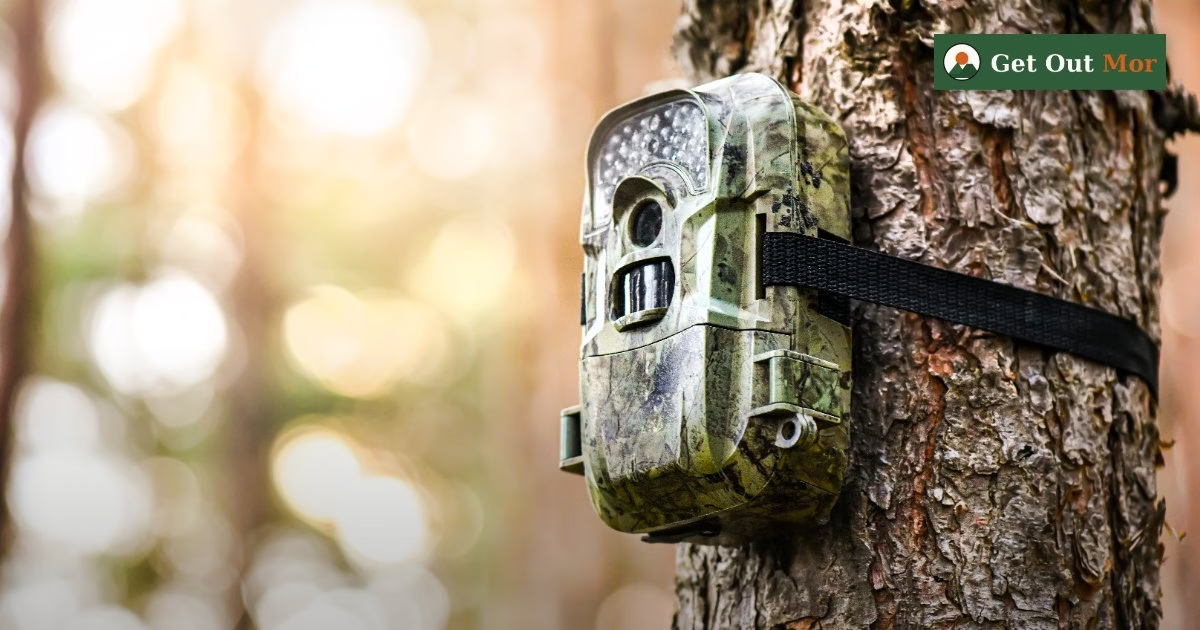
Set it 10–15 ft off the trail at a slight angle (not head-on), about waist height, facing north or south so sunrise and sunset glare don’t wash out your photos.
Trail camera comparison (2026)
| Camera | Type | Best for | Flash | Power | Buy |
|---|---|---|---|---|---|
| Tactacam Reveal Ultra | Cellular | Best image quality | No-glow IR | 12 AA | Amazon |
| SPYPOINT Flex | Cellular | Best free plan | Low-glow IR | 8 AA | Amazon |
| GardePro E5S | Non-cellular | Best value overall | No-glow IR | 8 AA | Amazon |
| Browning Recon Force Elite HP5 | Non-cellular | Wary mature bucks | No-glow IR | 8 AA | Amazon |
| WOSPORTS Mini | Non-cellular | Cheapest that works | Low-glow IR | 4 AA | Amazon |
Shopping cellular specifically? We ranked those separately in the best cellular trail cameras of 2026, including which models send photos with no subscription.
The best trail cameras for deer hunting
Tactacam Reveal Ultra
Premium cellular features — live view, no-glow, rock-solid reliability — at a mid-tier price.
Pros
- On-demand live view from your phone
- No-glow flash (safe for wary bucks)
- Reliable connection on weak signal
Cons
- Requires a data plan (~$10/mo)
- Live view drains batteries faster
Key features
- Type: cellular
- Flash: no-glow IR
- Trigger: ~0.3s
- Plan: from ~$5–$13/mo
- Best for: private/leased deer ground
undefined
SPYPOINT Flex
The easiest cheap way into cellular scouting, with dual-carrier signal and a free photo tier.
Pros
- Low entry price
- Auto-picks the best carrier
- Free 100-photo/mo plan to start
Cons
- Low-glow flash (not ideal on a target buck)
- App can be busy
Key features
- Type: cellular
- Flash: low-glow IR
- Trigger: ~0.4s
- Plan: free tier, paid from ~$10/mo
- Best for: first cellular camera
undefined
GardePro E5S
Outperforms cameras twice its price — the value pick when you do not want a subscription.
Pros
- Fast trigger + no-glow flash
- High image quality for the price
- No monthly fees
Cons
- You must walk in to pull the SD card
- No remote alerts
Key features
- Type: SD card (non-cellular)
- Flash: no-glow IR
- Trigger: ~0.1s
- Detection: ~100 ft
- Best for: budget & pressured public land
undefined
Browning Recon Force Elite HP5
A hunter-favorite no-glow workhorse with excellent night images and dependable triggering.
Pros
- Crisp no-glow night photos
- Very fast, consistent trigger
- Tank-tough housing
Cons
- Pricier than budget SD cams
- Non-cellular (manual check)
Key features
- Type: SD card (non-cellular)
- Flash: no-glow IR
- Trigger: ~0.2s
- Best for: mature-buck setups
- Tier: Premium SD
undefined
WOSPORTS Mini Trail Camera
A credible no-frills SD camera for running a lot of locations without breaking the bank.
Pros
- Very inexpensive
- Compact and easy to hide
- Good battery life
Cons
- Slower trigger than premium cams
- Basic image quality
Key features
- Type: SD card (non-cellular)
- Flash: low-glow IR
- Trigger: ~0.5s
- Best for: covering many spots cheaply
- Tier: Entry-level
undefined
How to choose a trail camera for deer
Cellular vs. non-cellular
Cellular sends photos to your phone so you never spook the spot — worth the monthly plan on ground you hunt hard. Non-cellular is cheaper with no fees, but every card pull leaves scent. Match it to how often you can afford to be in there.
Flash: no-glow vs. low-glow
No-glow (black) IR is invisible to deer — use it near a target buck. Low-glow is slightly sharper at night but emits a faint red light some mature deer notice. For general inventory, low-glow is fine; for a specific buck, go no-glow.
Trigger speed
Under 0.3 seconds catches deer crossing a trail; a 1-second trigger misses 30–40% of them. Prioritize trigger speed over megapixels.
Batteries & power
Lithium AAs last far longer in cold than alkaline. Cellular and live-view cameras eat batteries — add a solar panel or external pack on remote sets.
FAQ
Only if minimizing intrusion matters — on private or leased ground it is a huge advantage. On a tight budget or pressured public land, a fast no-glow SD camera like the GardePro E5S does the job for less.
For a specific mature buck, yes. The invisible flash avoids the faint red glow that can change wary-deer behavior. For general scouting, low-glow is acceptable.
Most land around $10/month per camera for unlimited photos; several brands offer free starter tiers. A 5-camera setup runs roughly $50/month or ~$600/year.
Bottom line
For most deer hunters, the Tactacam Reveal Ultra is the best cellular camera and the GardePro E5S is the best no-subscription pick. Choose cellular vs. non-cellular first, prioritize fast trigger and no-glow flash, and you will scout smarter without bumping your buck.
Trail camera reviews, tested: Tactacam Reveal Ultra, SPYPOINT Flex-M, and GardePro E5S.