

Alabama Bowfishing Guide: Best Lakes, Rivers, and Rules
Lake Guntersville, Lake Weiss, the Mobile-Tensaw Delta, and Mobile Bay — where to bowfish in Alabama and what to know before you go.
Alabama punches well above its weight for bowfishing — search-interest data actually ranks it ahead of Texas, and the water backs that up.
From Tennessee Valley reservoirs holding carp past 30 pounds to brackish Gulf Coast bays where bowfishers take sheepshead, black drum, and gar from the same boat, Alabama covers both freshwater and saltwater bowfishing in a way few states can match.
| Water Body | Target Species | Notable Sizes | Best Season |
|---|---|---|---|
| Lake Guntersville | Carp, buffalo, gar, drum | 73 lb grass carp (AL state record, 2012); 57 lb buffalo (state record) | Spring–early fall; April spawn is prime |
| Weiss Lake | Carp, gar, buffalo | A numbers lake more than a trophy lake — high-volume shoots reported, no verified trophy sizes | Spring shallow-water spawning activity (soft inference) |
| Mobile-Tensaw Delta | Alligator gar (marquee species), plus gar, carp, buffalo | 151 lb 9 oz alligator gar (official AL state record, 2009); 2/day bag limit, no size limit | Spring spawn; warm-season nights common |
| Mobile Bay | Mullet, stingray, sheepshead, black drum (redfish/trout are protected gamefish, not legal targets) | Stingrays reported 200–400 lb by area charters (anecdotal) | Warmer months typically most productive |
Alligator gar harvest in Alabama is capped at 2 per person per day with no minimum size (Ala. Admin. Code r. 220-2-.105).
Lake Guntersville
Lake Guntersville is best known nationally for bass, but it holds up just as well for bowfishing — grass carp have reached 73 pounds here — Alabama’s official state record, set in 2012 — with some tournament-caught fish reported even larger. The lake’s shallow grass flats and stump fields hold fish close to the surface through the warmer months, and it’s large enough that pressure rarely feels heavy even on a busy weekend.
Lake Weiss

Lake Weiss, on the Alabama-Georgia line, is a shore-friendly option — carp are visible and shootable right from the bank in the right spots, which makes it a good pick if you don’t have a boat rigged for night bowfishing yet. One local note: running an airboat here late at night can draw a noise-ordinance citation, so plan your session accordingly if you’re on a loud rig.
Mobile-Tensaw Delta & the Tennessee River

The Mobile-Tensaw Delta is one of the most biologically diverse river deltas in the country, and it holds heavy numbers of gar, buffalo, and carp in its backwaters and sloughs. Upstate, the Tennessee River corridor through north Alabama offers similar targets with a different feel — more current, more structure, and long stretches with little bowfishing pressure.
Mobile Bay & Orange Beach (Saltwater)
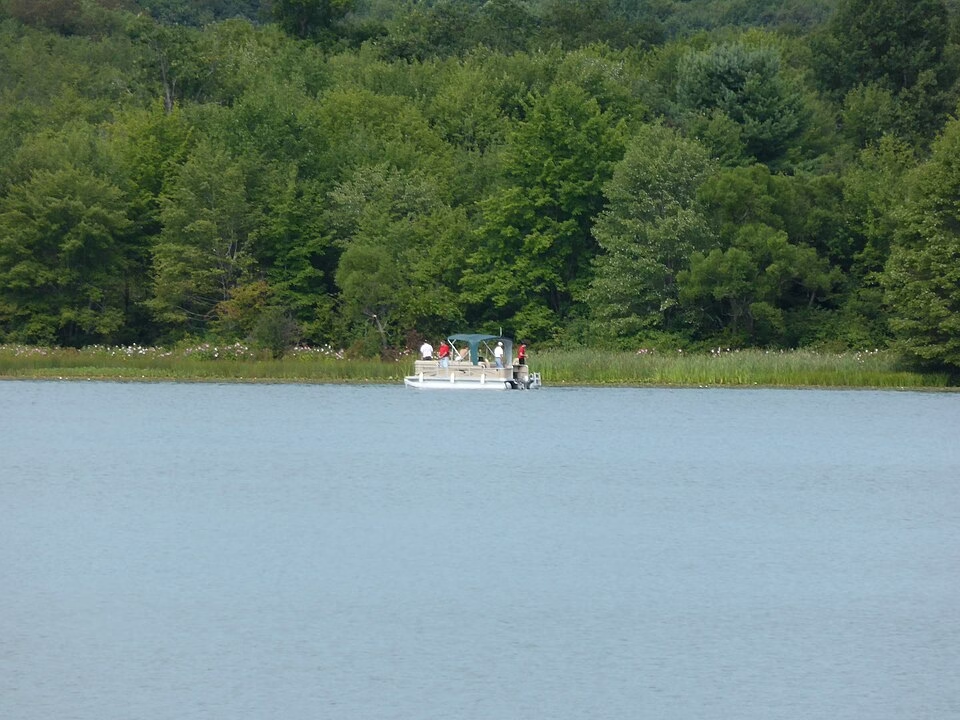
Alabama is one of the few states where bowfishing crosses over into saltwater in a serious way. Mobile Bay’s brackish water — where fresh and salt mix — holds sheepshead, black drum, mullet, stingrays, and both spotted and alligator gar. Orange Beach has become enough of a hotspot that dedicated saltwater bowfishing charters now run out of the area. Popular sportfish like redfish, spotted seatrout, and tarpon stay off-limits to the bow even in salt water — this is strictly a non-game and rough-fish method.
Regulations & License
Bowfishing in Alabama requires a standard sport fishing license, and it’s legal with any longbow, recurve, compound bow, or crossbow, using barbed arrows attached to the bow, a float, or the vessel by line. As in most states, the bow is restricted to non-game and invasive species — you cannot bowfish for red drum, spotted seatrout, tarpon, or freshwater game fish. Rules are set by the Alabama Department of Conservation and Natural Resources, Wildlife and Freshwater Fisheries Division, and they can change — confirm current regulations before you go, especially for saltwater trips where shark and ray rules add extra detail.
When to Go
Most Alabama bowfishing happens after dark, when lights draw fish shallow and carp and gar hold still enough for a clean shot. Warmer months — roughly April through September — put more fish in skinny water and stretch your shooting light later into the evening. Guntersville and Weiss fish best when water levels are stable and grass beds are up; the Delta and Mobile Bay stay productive later into fall thanks to warmer coastal water temperatures.
Gear We Recommend
Here is the gear that makes this easier, ready to shop. As an Amazon Associate, we earn from qualifying purchases.
- Bowfishing bow kit — See bows
- Bowfishing reel — Shop reels
- Arrows — See arrows
- Line — Browse line
- Gloves — See gloves
Related from Get Out Mor
- Bowfishing Hub — core gear, other state guides, and the basics.
- Fishing Hub — freshwater, saltwater, and spearfishing on the Gulf Coast.
- Spearfishing — the Gulf Coast’s other bow-and-blade fishing method.
Written by J. Bond — time spent on Alabama’s rivers and reservoirs informs this guide.

