Best Car Camping Tents (2026): Family Tents for Every Budget
“Best car-camping tent” and “best family camping tents” are two of the highest-volume queries in the camping space that Camping content on this site hasn’t directly answered yet. Car camping tents trade the ultralight priorities of backpacking gear for space, headroom, and comfort — since you’re hauling it in a trunk, not on your back. Here’s what’s worth buying across a range of budgets.

Best Car Camping Tents by Category
Shop our category picks on Amazon. As an Amazon Associate, we earn from qualifying purchases.
- Best overall family tent — See family tents
- Budget pick — Shop budget tents
- Quick-setup (instant) — See instant tents
- Big-group cabin — Browse large tents
- Weatherproof 4-season — See weatherproof tents
- Rooftop option — Shop rooftop tents
| Tent | Best for | Price | Why it stands out |
|---|---|---|---|
| NEMO Aurora Highrise 4 | Best overall | ~$400 | Steep sidewalls mean nearly all the interior square footage is usable space, with a 75-inch standing height throughout — easy setup and strong ventilation round it out. |
| The North Face Wawona 6 | Best for families | $500+ | Excellent head height throughout and a massive vestibule with room for kids to change clothes or set up camp chairs out of the weather. |
| Kelty Wireless 4 | Best value for families | ~$190 | A 59-inch peak height with a surprising amount of shoulder room for the price, plus two large vestibules for gear storage. |
| REI Co-op Campwell 4 | Best budget pick | $229 (frequently discounted) | A low-barrier-to-entry tent built for campground car camping — ideal for families new to camping who don’t want to overspend on their first tent. |
| Mountainsmith Conifer 5+ | Best for groups | $300–$400 | Roomy basecamp-style tent with generous headroom, strong ventilation, and dual vestibules including one oversized front vestibule for gear. |
What Actually Matters for a Car Camping Tent
Since weight isn’t a real constraint when you’re car camping, prioritize differently than you would for a backpacking tent:
- Peak height and wall angle: A tent with steep, near-vertical walls (like the NEMO Aurora Highrise) delivers far more usable interior space than the same square footage in a traditional dome shape.
- Vestibule size: A large vestibule keeps muddy boots, coolers, and gear out of the sleeping area without needing a separate canopy.
- Ventilation: Look for mesh panels and a rainfly with adjustable venting — condensation is a bigger issue in family-size tents than in smaller backpacking tents simply because more people means more moisture overnight.
- Blackout or light-blocking rainfly: A feature like Kelty’s Twilight Tech fabric that darkens the interior can be the difference between kids sleeping in past sunrise or not, especially on early-summer trips.
Setup and Care Tips
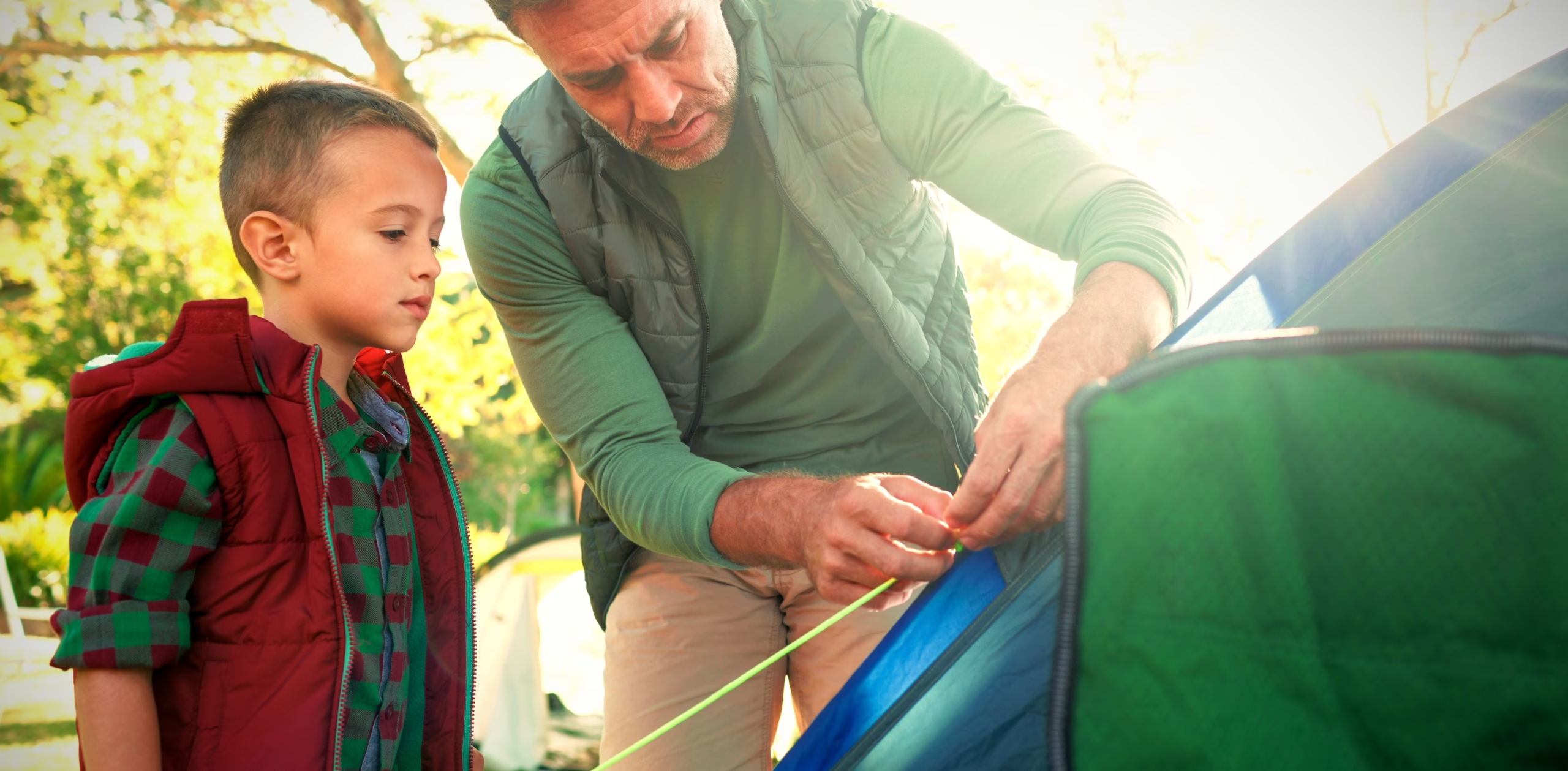
Practice pitching any new tent at home before your first trip — even an “easy setup” family tent has a learning curve the first time, and you don’t want to be figuring out pole configurations in a parking lot at dusk. Always use a footprint or ground tarp sized to (or slightly smaller than) your tent’s floor to prevent puncture damage and moisture wicking up from the ground, and let the tent fully air-dry before packing it away to prevent mildew.